
 Updated on
 By Katie Bowman
Table of Contents

Selecting the right customer relationship management platform early on can define your go-to-market speed, lead conversion rates, and overall revenue velocity. With dozens of platforms claiming to be the best CRM tools for startups, founders need a solution that balances cost, customizability, and ease of use. This guide cuts through the noise to help you choose the ideal CRM platform to scale your business.
Key Takeaways
- Best Pick by Use Case: Ringy stands out as the best all-around CRM for startups by combining automated calling, SMS outreach, and pipeline tracking into one affordable, high-velocity sales platform. HubSpot or Zoho are good for all-in-one ecosystem capabilities. Attio works well for data-driven tech stacks, while Salesforce is for enterprise-ready scalability, and Monday.com is for project-heavy pipeline management.
- Pricing Context & Budgeting: Early-stage teams should evaluate the total cost of ownership rather than baseline seat prices, and watch closely for hidden add-ons such as cloud telephony credits, API limits, or steep price cliffs after initial startup discount periods end.
- Implementation Timeline Expectations: Out-of-the-box platforms like Pipedrive and Monday.com require 1–3 days to deploy, whereas highly customized enterprise engines like Salesforce or multi-hub HubSpot setups can take 3–6 weeks of RevOps configuration.
- High-Value Buyer Criteria: Prioritize seamless email/calendar syncing, native automated drip sequences, flexible custom object modeling, transparent usage rates, and responsive user support when evaluating top CRM solutions for startups.
How We Evaluated the 7 Best CRM Tools for Startups

To identify the top platforms, we evaluated dozens of vendors across strict startup-centric benchmarks, focusing heavily on lead engagement efficiency, core automation features, pricing transparency, and long-term scalability. We explicitly excluded overly rigid legacy tools that require dedicated RevOps administrators or high upfront consulting fees.
Our evaluation synthesizes real-world testing with verified user reviews from benchmark third-party software platforms including Clutch, G2, and Capterra.
|
Tool |
Best For |
Key Features |
Starting Price |
Third-Party Rating |
Pros |
Cons |
Free Trial |
|
Direct outbound call & SMS sales automation |
Integrated VoIP dialer, drip SMS/email, click-to-call, automated lead routing |
4.3/5 (Capterra) |
Built-in cloud softphone & SMS allowance, fast setup |
Telephony usage add-ons require monitoring |
Yes |
||
|
All-in-one inbound marketing and sales ecosystem |
Pipeline management, marketing automation, email tracking, contact enrichment |
Free plan ($15/user/mo paid) |
4.4/5 (G2) |
Massive 90% startup discount tier, highly intuitive |
High renewal costs after startup tiers expire |
Free plan available |
|
|
Enterprise scalability and high customization |
Process Builder, Einstein AI, advanced forecasting, deep AppExchange ecosystem |
$25/user/mo |
4.5/5 (G2) |
Unmatched customization, massive integration library |
Steep learning curve, requires RevOps overhead |
30-day free trial |
|
|
Visual deal pipelines and direct sales focus |
Drag-and-drop pipelines, Smart Contact Data, AI sales assistant, email sync |
$14/user/mo |
4.5/5 (Capterra) |
Extremely user-friendly, focus on visual selling |
Limited native marketing automation features |
14-day free trial |
|
|
Tech-forward & data-driven B2B startups |
Custom data modeling, real-time sync, AI research agent, modular views |
Free ($29/user/mo paid) |
4.3/5 (G2) |
Modern UI, flexible custom objects, seamless sync |
Advanced AI features rely on credit limits |
Generous free tier |
|
|
Budget-friendly all-in-one customization |
Canvas design builder, Zia AI, automated workflows, multi-channel support |
$14/user/mo |
4.1/5 (G2) |
Feature-rich entry price, deep app ecosystem |
UI can feel dated, initial setup takes time |
15-day free trial |
|
|
Visual project management and sales workflows |
Customizable boards, lead scoring, automation recipes, client dashboards |
$12/user/mo |
4.5/5 (G2) |
Great multi-team collaboration, visual customization |
Lacks built-in deep sales dialer/telephony |
14-day free trial |
Ringy CRM — Best for Automated Sales Communication & Outbound Outreach
Overview
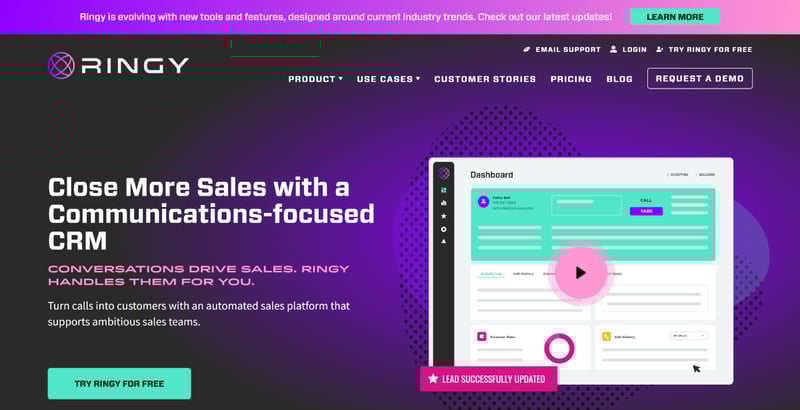
Ringy CRM is a unified sales execution engine that blends classic contact tracking with high-volume outbound communication. Designed to help lean teams convert cold leads into paying customers quickly, it bundles a cloud VoIP softphone, click-to-call functionality, automated drip messaging, and intelligent lead distribution right out of the box.
For founders looking for an actionable sales CRM for startups, Ringy eliminates the need to stitch together separate dialers, SMS tools, and contact databases. Its core philosophy centers on immediate outreach and seamless automated follow-ups.
Best for
- Startups needing an integrated sales CRM for startups with native VoIP dialing and SMS drip automation.
- Lean sales teams looking for a reliable CRM tool for startups that speeds up contact rates without extra plugins.
Honest Limitations
While Ringy excels at outbound outreach, teams that require complex enterprise-grade data architecture or multi-channel marketing attribution may find its core analytics relatively straightforward compared to heavy enterprise suites. Additionally, high-volume callers need to monitor monthly add-on usage carefully to optimize telecommunication spending.
When to Choose Ringy
Choose Ringy if your startup business relies heavily on direct sales calls, instant SMS follow-ups, and automated lead nurturing sequences to drive revenue. It provides an all-in-one communication powerhouse that cuts down software fragmentation, making it an ideal CRM for startup companies that prioritize speed-to-lead and rep productivity over complex administrative configuration.
HubSpot for Startups — Best for Inbound Growth & Scalable All-in-One Operations
Overview
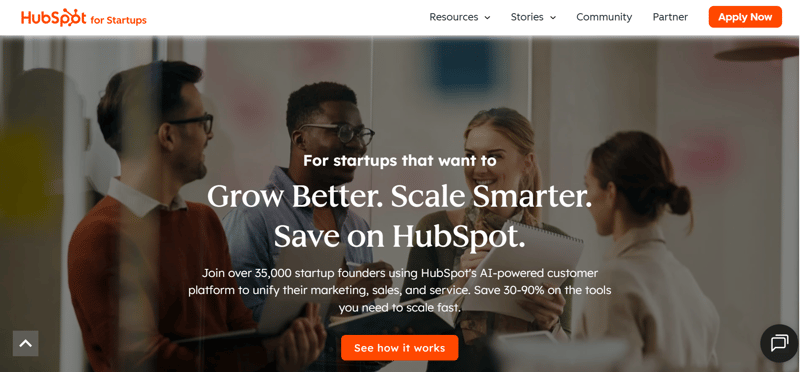
HubSpot for Startups delivers a powerful platform combining sales, marketing, customer service, and content management into a centralized database. Highly popular among venture-backed founders, it provides a polished user interface that allows non-technical teams to launch landing pages, manage pipelines, and track contact interactions seamlessly. Eligible seed and Series A companies can access generous discount tiers that significantly lower the entry barrier for its premium Professional and Enterprise hubs.
Best for
- Funded companies seeking a robust CRM solution for startups backed by up to 90% program discounts.
- Marketing-driven founding teams that require unified lead capture, email nurturing, and deal tracking.
- Organizations looking for an intuitive best CRM system for startups with extensive third-party integration support.
Honest Limitations
HubSpot's standard list pricing scales rapidly as your contact database grows or as you step off the startup discount program. Without careful plan management, annual renewals after year two can create unexpected budget constraints for bootstrapping founders.
When to Choose HubSpot for Startups
Choose HubSpot if you qualify for their founder discount program and want an all-in-one growth engine that aligns marketing automation directly with sales pipeline management. It is particularly effective for teams building sophisticated inbound lead funnels that require native email tracking and web analytics in one place.
Salesforce — Best for High-Growth Enterprise Scaling & Custom Workflows
Overview
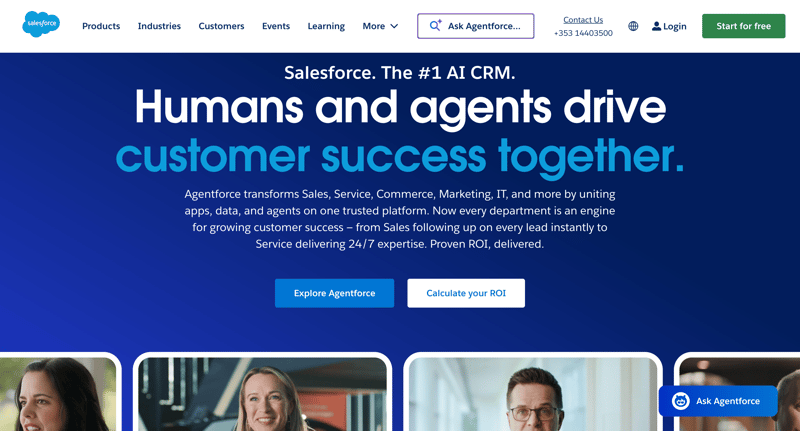
Salesforce Starter and Professional editions bring the world’s most powerful customer platform down to early-stage businesses. Known for its unmatched flexibility, Salesforce allows companies to customize objects, automate intricate approval workflows, and build granular reporting dashboards. For technical founders or revenue operations leads building a long-term commercial structure, Salesforce offers an unshakeable foundation that supports infinite business scaling.
Best for
- Rapidly expanding teams that need a comprehensive best CRM tool for startups with enterprise data customization.
- Complex sales organizations requiring granular security permissions, custom objects, and advanced forecasting.
Honest Limitations
Salesforce requires a steeper setup curve than lightweight drag-and-drop tools. Early-stage startups without dedicated RevOps support may find the platform’s vast array of configuration settings overwhelming during initial onboarding.
When to Choose Salesforce
Choose Salesforce if your business model involves long, complex enterprise sales cycles or custom workflows that demand specialized data structures. It is the best choice for startups backed by investors who require enterprise-grade reporting and seamless future expansion into large sales teams.
Pipedrive — Best for Visual Pipeline Management & Pure Sales Focus
Overview
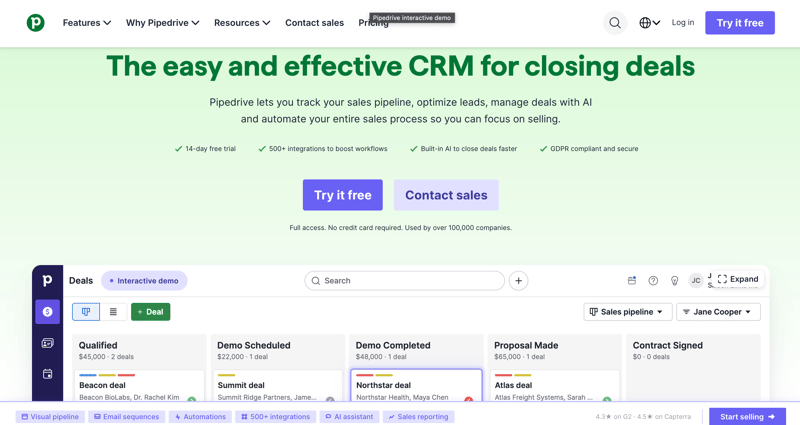
Pipedrive is built around an activity-based selling philosophy that keeps sales reps focused on closing actions. Its flagship drag-and-drop pipeline view provides complete transparency into deal stages, expected revenue, and upcoming tasks. By minimizing administrative clutter and emphasizing visual simplicity, Pipedrive serves as a highly efficient, cheap CRM for startups that need to get sales reps operating at full capacity within hours.
Best for
- Early sales teams looking for a simple CRM software for startup operations focused strictly on deal velocity.
- Founders who want a clean visual interface with zero learning curve and instant activity tracking.
Honest Limitations
Pipedrive is heavily engineered for direct deal execution, meaning its native tools for broad digital marketing, content distribution, and customer support tickets are lightweight compared to dedicated all-in-one suites.
When to Choose Pipedrive
Choose Pipedrive if your primary goal is to establish a structured, easy-to-use deal pipeline without paying for complex marketing features you won't use. It is ideal for lean outbound sales teams that prioritize daily activity logging and deal movement.
Attio — Best for Tech-Forward & B2B Tech Startups
Overview
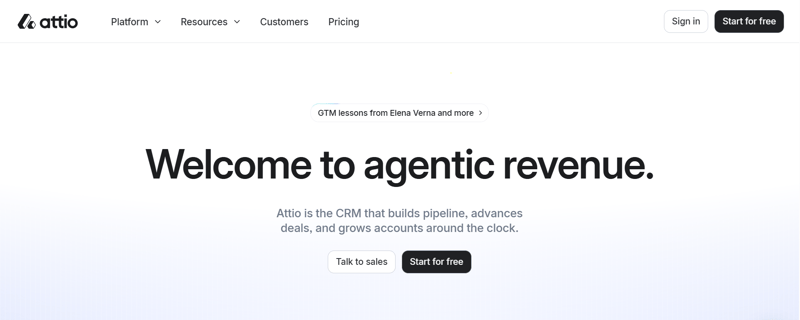
Attio is a modern, data-first CRM designed for modern B2B tech companies. Built with an architecture similar to modern database engines, Attio allows teams to build fully dynamic workflows, custom relationship objects, and real-time collaborative data views. It continuously enriches contact records using real-time web data and integrates smoothly with modern developer tools, making it a standout best CRM for B2B startups in SaaS, fintech, and developer tooling.
Best for
- Tech-focused teams seeking flexible CRM solutions for startups with customizable data relationships.
- Modern B2B founders who require real-time contact enrichment and seamless data synchronization.
Honest Limitations
Attio’s modular, open-ended design means it provides fewer rigid, pre-built templates out of the box. Teams must spend time structuring their own object relationships and views to get the maximum value out of the software.
When to Choose Attio
Choose Attio if you run a product-led or data-heavy tech company that needs a flexible, modern platform capable of handling non-traditional data relationship models. It is ideal for teams that value speed, clean UI design, and deep programmatic flexibility.
Zoho CRM — Best for Budget-Friendly All-in-One Customization
Overview
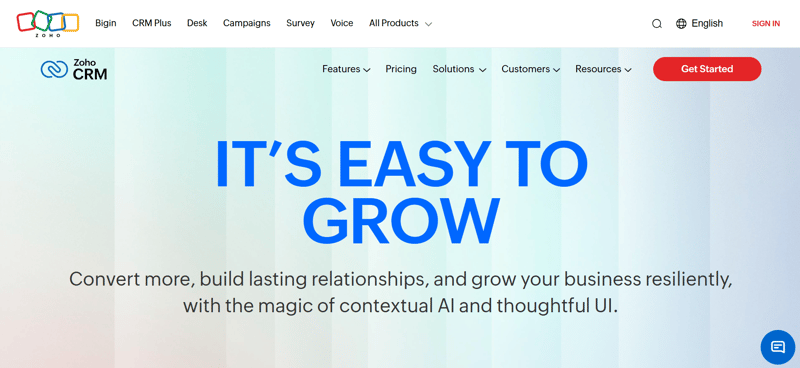
Zoho CRM delivers an impressive range of sales automation, lead scoring, and multi-channel communication tools at an accessible price point. Part of the broader Zoho suite, it includes AI sales assistance (Zia), custom canvas UI design, and deep workflow rules. As a versatile CRM tool for startups, Zoho allows growing businesses to build customized sales engines without incurring exorbitant seat fees.
Best for
- Cost-conscious founding teams seeking a cheap CRM for startups with enterprise-level feature depth.
- Companies looking to integrate sales management with accounting, HR, and helpdesk tools within one vendor ecosystem.
Honest Limitations
Because Zoho offers vast customization options across dozens of apps, its user interface can occasionally feel fragmented. Setting up advanced automation rules requires a bit of trial and error during initial configuration.
When to Choose Zoho CRM
Choose Zoho CRM if your company needs robust enterprise features, workflow automation, and multi-channel contact tracking while operating on a strict budget. It provides exceptional value for teams aiming to scale their software stack affordably.
Monday.com — Best for Visual Project Tracking & Cross-Functional Workflows
Overview
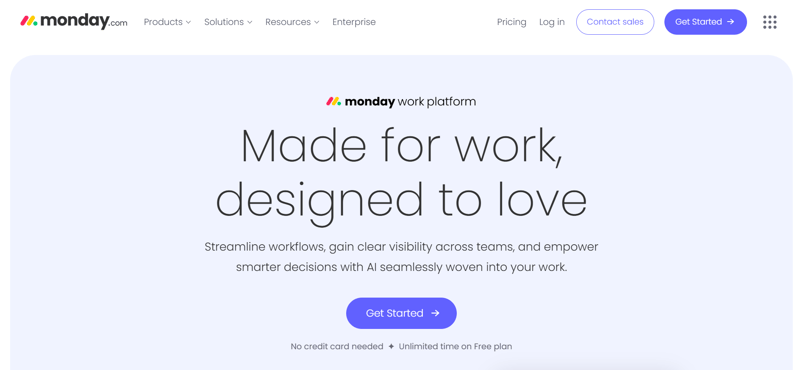
Monday Sales CRM leverages Monday.com’s popular, highly visual work OS to manage pipelines alongside operational project workflows. It allows teams to track leads, manage accounts, and monitor post-sale onboarding on interactive boards. For early-stage companies where team members manage both sales and customer fulfillment, this flexible platform offers a centralized workspace for cross-functional collaboration.
Best for
- Multi-functional teams looking for adaptable CRM systems for startups that merge deal pipelines with project delivery.
- Startups that prefer colorful, spreadsheet-style board customization with built-in automation shortcuts.
Honest Limitations
While Monday Sales CRM handles deal tracking and client onboarding exceptionally well, it lacks advanced native phone dialers or deeply technical outbound sales communication tools without third-party integrations.
When to Choose Monday.com
Choose Monday Sales CRM if your business model requires tight alignment between closing deals and delivering client services. It is perfect for agency, consulting, and service-oriented startups that prioritize visual collaboration.
Frequently Asked Questions

Which CRM tool is cheapest for early-stage startups?
Free CRM tiers from HubSpot and Attio offer basic contact tracking at zero cost, while Ringy ($119/mo base) and Pipedrive ($14/user/mo) deliver the most cost-effective paid plans when factoring in built-in sales tools.
How quickly can a startup deploy a new CRM?
Out-of-the-box platforms like Ringy, Pipedrive, and Monday.com can be fully operational in 24–48 hours, whereas highly customized setups on Salesforce or HubSpot take several weeks.
Should startups choose an all-in-one CRM or a specialized sales tool?
Startups focused heavily on high-volume outbound calls and SMS convert faster with specialized sales engines like Ringy, whereas inbound-heavy models benefit more from all-in-one ecosystems like HubSpot.
Conclusion
Choosing from among the best CRM tools for startups ultimately comes down to matching your primary go-to-market motion with the right software architecture. If your team relies on inbound marketing and venture funding, HubSpot offers an expansive ecosystem. If you need maximum enterprise customization, Salesforce remains the industry standard.
However, if your immediate priority is driving revenue through direct outreach, automated calling, and rapid SMS engagement, Ringy CRM provides the ultimate competitive advantage. With its built-in VoIP softphone, click-to-call dialing, and automated drip sequences, Ringy gives lean founding teams everything they need to convert leads faster and scale revenue efficiently.
Ready to accelerate your startup's sales velocity? Request a Ringy CRM demo today and transform your outbound sales execution.

Skyrocket your sales with the CRM that does it all.
Calling? Check. SMS? Check. Automation and AI? Check. Effortlessly keep in touch with your customers and boost your revenue without limits.