 Updated on
 By Robins Dorvil
Table of Contents

Customer engagement software has quietly become the engine behind how modern brands win repeat business. It's what turns scattered touchpoints into conversations that feel timely, relevant, and surprisingly human.
When customers expect instant responses, personalized offers, and consistent experiences across channels, generic outreach stops working fast. The teams that stand out are the ones using smarter systems to listen, respond, and adapt in real time, without adding chaos to their workflows.
That shift has sparked a crowded, competitive market filled with platforms promising better engagement, higher loyalty, and more revenue. Some live up to the hype. Many don't. The difference usually comes down to how well the software connects data, channels, and intelligence into one usable experience.
With that foundation in place, let's break down what customer engagement software really is, what features actually matter, and which tools are leading the pack today.
What Is Customer Engagement Management Software?
Customer engagement management software is a data-driven technology framework designed to manage and enhance real-time interactions between a company and its customers.
Unlike traditional CRMs that focus on storing historical records, this software prioritizes active communication across channels like email, SMS, web, mobile apps, and social platforms to build stronger, long-term relationships.
Engagement vs. CRM
CRM systems were built to document relationships. Customer engagement management software exists to run them. As buyer journeys become non-linear and channel-hopping becomes the norm, businesses need systems that respond in real time—not just report what already happened.
|
Category |
Customer Engagement Software |
Traditional CRM |
|
Core Focus |
Real-time interaction and experience |
Contact and deal management |
|
Primary |
Orchestrating conversations across channels |
Storing customer and sales data |
|
Data Utilization |
Live behavioral, contextual, and intent data |
Historical and transactional records |
|
Communication |
Two-way, continuous, omnichannel |
Mostly outbound or sales-driven |
|
Outcome |
Higher retention, loyalty, and lifetime value |
Pipeline visibility and forecasting |
This distinction explains why many companies now pair CRMs with customer engagement and loyalty software rather than relying on CRM alone.
Core Features of Modern Software for Customer Engagement
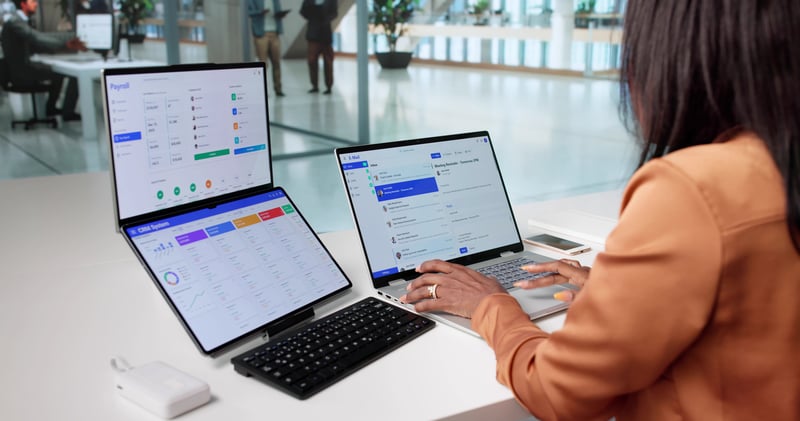
The most effective customer engagement software companies focus on removing friction between data, communication, and action.
Modern platforms unify engagement into a single operational layer, replacing siloed tools. This is especially important as the customer engagement software market is projected to grow globally at over 9.36% CAGR between 2025 and 2035.
Let's look at some of the features that will contribute to that growth.
|
Feature |
Description |
|
Omnichannel Connectivity |
Consistent experiences across touchpoints |
|
Intelligent Automation |
Faster response with less manual effort |
|
Unified Customer Profiles |
Personalization at scale |
|
Real-Time Analytics |
Measurable engagement performance |
Omnichannel Connectivity
Omnichannel customer engagement software centralizes conversations from email, chat, SMS, social media, and in-app messaging into one inbox. This prevents fragmented experiences where customers repeat themselves, and teams lose context.
The best omnichannel customer engagement software ensures continuity, no matter where the conversation starts or resumes.
This is especially critical for social media customer engagement software and conversational customer engagement software, where response speed and context directly influence satisfaction.
Intelligent Automation
Modern platforms rely heavily on AI customer engagement software to trigger messages based on behavior, timing, and intent. Intelligent automation enables teams to send onboarding messages, renewal reminders, or support follow-ups exactly when they're most relevant.
Essential automation capabilities include workflow builders, predictive suggestions, dynamic decision paths, and real-time orchestration across touchpoints, all designed to keep engagement relevant and timely.
Unified Customer Profiles
Unified profiles bring together behavioral data, purchase history, feedback, and interaction logs into a single view. Instead of guessing, teams can personalize outreach based on real context.
This is a core differentiator among top-rated customer engagement software vendors and is especially valuable in financial services customer engagement software and utility customer engagement software, where trust and relevance matter most.
Real-Time Analytics
Digital customer engagement software tracks performance as it happens. Metrics like response time, engagement rate, churn signals, and CSAT help teams adjust strategies instantly instead of waiting for monthly reports.
As engagement expectations rise, real-time analytics separate the most popular software for customer engagement from tools that simply collect data.
Together, these features define what the best customer engagement software in 2026 and beyond looks like, and why businesses are rethinking how they manage customer relationships entirely.
The Power of Omnichannel Customer Engagement Software

Omnichannel customer engagement software sits at the center of how modern businesses create continuity across the customer journey. As buyers move fluidly between messaging apps, email, websites, and social platforms, engagement breaks down when those interactions live in silos.
The strongest customer engagement software platforms solve this by unifying every conversation into a single, context-aware experience.
Consistency Across Touchpoints
If a customer starts a product inquiry on WhatsApp, follows up via email, and later reaches out through live chat, they expect the context to carry over automatically. Omnichannel customer engagement software makes that possible by syncing conversations, history, and intent across platforms.
This level of continuity matters more than ever. Research consistently shows that customers are significantly more likely to stay loyal to brands that deliver consistent experiences across channels. By centralizing communication, customer engagement management software ensures:
- No repeated questions or lost context
- Faster resolution times across teams
- A more "human" interaction, even at scale
That's why the best customer engagement software 2026 rankings heavily favor platforms with true omnichannel depth.
Reducing Friction
Friction is the silent killer of conversion. When customers are forced to switch platforms, restate their needs, or wait for delayed responses, engagement drops fast. Omnichannel customer engagement software reduces friction by meeting users where they already are, email, SMS, social media, or in-app messaging.
This approach turns casual browsers into paying customers by:
- Allowing real-time responses on preferred platforms
- Maintaining conversation flow across channels
- Enabling proactive outreach based on behavior
For many customer engagement software companies, this is the difference between passive communication and revenue-driving engagement, especially in high-competition environments like SaaS and ecommerce.
Top Trends in the Best AI-Powered Customer Engagement Software

AI is reshaping the customer engagement software market by shifting platforms from reactive tools to predictive systems. The best AI-powered customer engagement software anticipates needs, adapts messaging, and continuously improves outcomes.
Here are the top trends shaping the best AI-powered customer engagement software.
1. Hyper-Personalization at Scale
Personalization has moved far beyond static fields like "First Name." AI customer engagement software now uses real-time behavior, historical interactions, and contextual signals to tailor messages dynamically.
Examples include:
- Product recommendations based on browsing or usage patterns
- Personalized onboarding flows triggered by feature adoption
- Targeted offers tied to engagement or inactivity signals
Brands using behavior-based personalization consistently outperform generic campaigns, making this a defining feature of top-rated customer engagement software.
2. Predictive Analytics
Predictive analytics is one of the most valuable capabilities in the best AI software for boosting customer engagement. By analyzing patterns across customer data, platforms can identify who is likely to churn, upgrade, or convert, often before the customer takes action.
Predictive insights allow teams to:
- Trigger retention campaigns before disengagement happens
- Prioritize high-intent leads automatically
- Optimize outreach timing and messaging
This is especially powerful in financial services customer engagement software, and subscription-based models, where early intervention directly impacts lifetime value.
3. Generative AI for Support
Generative AI has transformed conversational customer engagement software. Modern chatbots now deliver human-like responses, handle complex queries, and escalate seamlessly when needed. Tools like Intercom's Fin AI and Tidio's Lyro provide 24/7 support without sacrificing tone or accuracy.
Key benefits include:
- Instant responses at any hour
- Lower support costs without lower quality
- Faster resolution for common and complex issues
This capability has become a baseline expectation in the most popular software for customer engagement.
4. Sentiment Analysis
Sentiment analysis adds emotional intelligence to digital customer engagement software. By scanning support tickets, chat logs, and social mentions, AI detects shifts in customer mood, including frustration, satisfaction, or urgency, in real time.
This allows teams to:
- Escalate negative experiences before they spiral
- Adjust tone and messaging dynamically
- Identify systemic issues driving poor sentiment
As customer expectations rise, sentiment-aware engagement is quickly becoming a differentiator among leading customer engagement software vendors.
Together, these trends show how customer engagement software is evolving, from systems that manage conversations to platforms that actively shape customer relationships.
Comparison: 5 Best Customer Engagement Software Platforms

With dozens of customer engagement software vendors competing for attention, comparing platforms side by side makes it easier to see where each one truly excels.
The tools below represent a cross-section of the customer engagement software market, spanning sales-driven automation, AI-first messaging, and enterprise-scale orchestration.
|
Platform |
Price Range* |
Key Channel Strength |
AI Features |
Target Audience |
|
Voice, SMS, calling, automation |
Workflow automation, smart routing, AI tools |
Sales teams & SMBs needing integrated voice + automation |
||
|
Free–Enterprise tiers |
Email, CRM, web |
AI content, predictive insights |
SMBs to mid-market |
|
|
Custom pricing |
In-app messaging |
Fin AI, automation |
Product-led SaaS |
|
|
Free–$59/month, paid monthly |
Live chat, web |
Lyro AI chatbot |
SMBs & ecommerce |
|
|
Enterprise pricing |
Omnichannel enterprise |
Einstein AI |
Large enterprises |
*Pricing is accurate as of January 2026 and subject to change.
1. Ringy
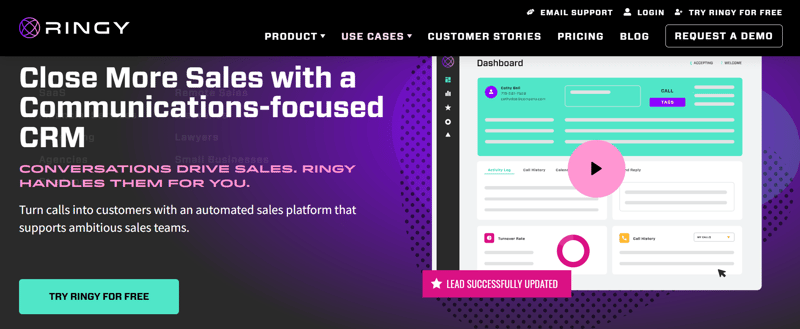
Ringy is purpose-built for sales-driven customer engagement software use cases, combining VoIP, SMS, and automation into one tightly integrated platform. Unlike tools that prioritize passive messaging, Ringy focuses on high-volume, real-time sales conversations with built-in intelligence. This makes it especially strong for teams that rely on speed, follow-ups, and call-based engagement.
Key Features:
- Automated Sales Workflows: Trigger calls, texts, and follow-ups based on lead behavior.
- Integrated VoIP Calling: Native calling eliminates third-party dialer dependencies.
- Conversation Tracking: Centralized visibility across calls and messages.
- Real-Time Reporting: Monitor activity, outcomes, and agent performance.
Ringy stands out as one of the best customer engagement software options for revenue-focused teams that live on the phone.
2. HubSpot
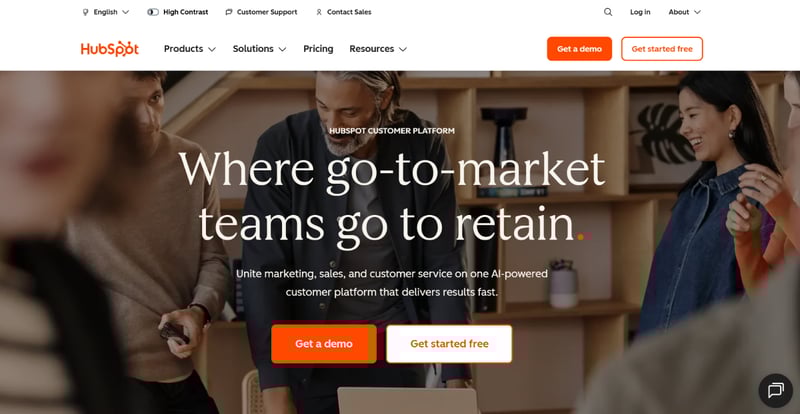
HubSpot blends CRM, marketing, and customer engagement management software into a single ecosystem. It's designed for teams that want engagement tied directly to lifecycle stages, campaigns, and pipeline visibility. Its flexibility makes it a popular entry point into digital customer engagement software.
Key Features:
- Unified CRM + Engagement: Marketing, sales, and service data in one system.
- AI-Assisted Content: Email and messaging optimization powered by AI.
- Omnichannel Tools: Email, chat, and social integrations.
- Analytics Dashboards: Track engagement across funnel stages.
HubSpot is ideal for businesses seeking an all-in-one platform rather than a specialized engagement engine.
3. Intercom
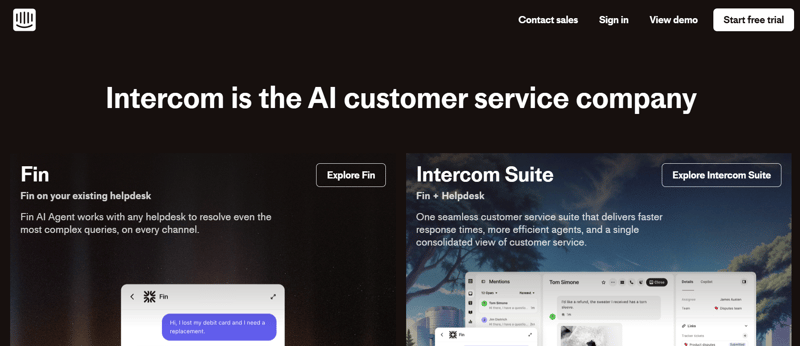
Intercom is widely recognized for AI-first conversational customer engagement software, particularly in SaaS environments. Its strength lies in contextual, in-app messaging combined with automation and support intelligence. Intercom's approach emphasizes proactive engagement over reactive support.
Key Features:
- Fin AI Assistant: Resolves customer queries autonomously.
- In-App Messaging: Contextual conversations tied to product usage.
- Automation Rules: Route and prioritize conversations intelligently.
- Customer Segmentation: Target users based on behavior and lifecycle.
Intercom excels where product experience and support engagement overlap.
4. Tidio
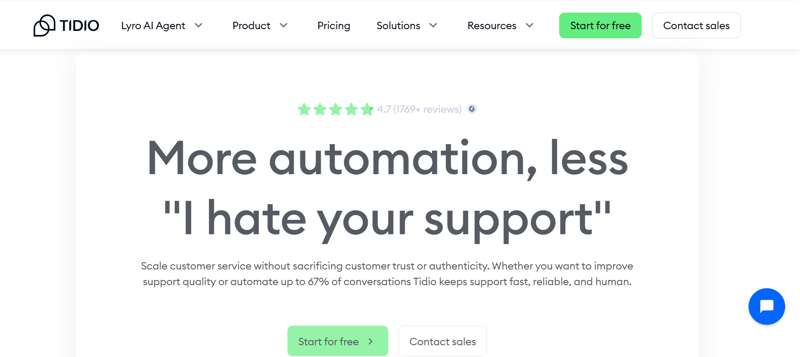
Tidio focuses on simplicity and speed, making it one of the most accessible customer engagement software companies for SMBs. It combines live chat with lightweight AI automation to help smaller teams stay responsive without heavy infrastructure.
Key Features:
- Lyro AI Chatbot: Handles FAQs and common requests instantly.
- Live Chat Inbox: Real-time conversations from web visitors.
- E-commerce Integrations: Native support for online stores.
- Quick Setup: Minimal configuration required.
Tidio is a strong option for teams prioritizing real-time engagement on a budget.
5. Salesforce Customer 360
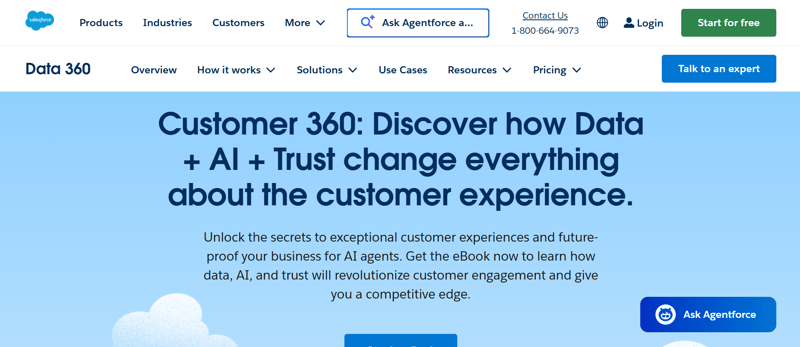
Salesforce Customer 360 is built for large-scale, complex engagement environments. It connects data, channels, and AI across massive customer ecosystems, making it a leader in enterprise-grade omnichannel customer engagement software.
Key Features:
- Unified Customer Data: Centralized profiles across all Salesforce clouds.
- Einstein AI: Predictive insights and automation at scale.
- True Omnichannel Orchestration: Email, voice, chat, social, and more.
- Enterprise Security & Compliance: Built for regulated industries.
Salesforce Customer 360 is best suited for enterprises managing millions of interactions across global teams.
How to Choose the Right Platform for Your Business

Choosing the right customer engagement software isn't about chasing the most popular platform or the longest feature list. It's about selecting a system that supports how your business actually acquires, serves, and retains customers.
With the customer engagement software market expanding rapidly, clarity at the decision stage prevents costly re-platforming later.
1. Align With Business Goals
Start with outcomes, not tools. Different customer engagement software companies optimize for different priorities, and misalignment here is the most common cause of underutilized platforms.
Ask what success looks like over the next 12–18 months:
- More qualified leads and faster follow-ups
- Higher retention and repeat purchases
- Reduced support volume with faster resolution
Sales-led teams often benefit from customer engagement management software focused on automation, calling, and SMS. Retention-driven businesses may lean toward customer engagement and loyalty software with personalization and lifecycle tracking.
Support-heavy organizations should prioritize conversational customer engagement software with AI-assisted routing and response. Clear goals narrow the field quickly and help avoid paying for features you'll never use.
2. Map Your Customer Journey
Customer engagement software is only effective when it reflects real customer behavior. Mapping your journey exposes where engagement breaks down and where the right platform can have the biggest impact.
Identify:
- Where customers first interact with your brand
- Which channels they use most frequently
- Where drop-offs, delays, or frustration occur
For example, if users abandon during onboarding, digital customer engagement software with triggered messaging and in-app guidance becomes essential. If conversations start on social and end in email or phone calls, omnichannel customer engagement software ensures continuity without repetition.
Businesses that align software to actual journey friction points consistently see stronger engagement metrics and higher conversion rates.
3. Evaluate Integrations
Even the best customer engagement software fails if it operates in isolation. Integration depth matters more than raw feature count.
Before committing, confirm the platform connects seamlessly with:
- Your CRM and marketing tools
- Billing or e-commerce systems
- Analytics, data warehouses, and support tools
AI customer engagement software is only as smart as the data it can access. Poor integrations lead to incomplete profiles, broken automation, and manual workarounds that teams quickly abandon.
According to industry benchmarks, companies with fully integrated engagement stacks are significantly more likely to meet retention and growth targets.
Prioritize software for customer engagement that fits naturally into your existing workflow rather than forcing process changes across teams.
4. Test the User Experience
Adoption determines ROI. A platform can be powerful on paper and still fail if teams don't use it consistently.
When evaluating tools:
- Look for intuitive navigation and clear workflows
- Test how quickly new users can become productive
- Take advantage of free trials or demos
Top-rated customer engagement software balances sophistication with usability. Platforms with steep learning curves slow teams down and delay results, especially in fast-moving sales or support environments.
Ultimately, the right platform feels less like "new software" and more like an extension of how your team already works. That's where long-term value comes from.
5 Strategies to Improve Your Engagement Results

Even the best customer engagement software won't deliver results on its own. Performance improves when the platform is paired with clear, repeatable engagement strategies that turn data into action.
The approaches below focus on how high-performing teams use modern customer engagement management software to drive measurable outcomes across the funnel.
1. Segment Your Audience
Segmentation is the foundation of effective engagement. Treating every customer the same leads to generic messaging and declining response rates. Modern software for customer engagement makes it easy to group users by industry, location, lifecycle stage, or real-time behavior.
Effective customer segmentation allows teams to:
- Personalize messaging without manual effort
- Deliver relevant offers based on intent signals
- Reduce unsubscribe and churn rates
Customer engagement software companies consistently report higher engagement rates when campaigns are segmented by behavior rather than demographics alone. This is especially important in financial services customer engagement software and B2B environments, where relevance drives trust.
2. Implement Drip Campaigns
Drip campaigns keep conversations alive long after the first interaction. Instead of relying on one-off messages, customer engagement software enables automated, multi-step sequences that educate, nurture, and convert leads over time.
Using platforms like Ringy, teams can automate calls, SMS, and follow-ups based on prospect actions, running engagement in the background 24/7. This approach ensures no lead falls through the cracks while maintaining consistent touchpoints.
Drip automation is a defining feature of the best customer engagement software 2026, particularly for sales-led organizations that need scale without sacrificing timing or relevance.
3. Foster Two-Way Communication
Digital customer engagement software increasingly includes social media customer engagement software features that surface brand mentions, comments, and sentiment in real time.
Two-way communication helps teams:
- Respond to customer feedback before issues escalate
- Identify product gaps or messaging misalignment
- Build credibility through visible responsiveness
Brands that actively respond to customer conversations on social platforms consistently outperform those that remain silent. This capability turns engagement into an ongoing dialogue rather than a one-directional campaign.
4. Leverage Speed to Lead
Speed matters more than most teams realize. Following up with a lead within five minutes can increase conversion rates by up to 9x compared to delayed responses. Omnichannel customer engagement software makes rapid follow-up possible by routing inquiries instantly to the right channel or rep.
Speed-to-lead success depends on:
- Automated lead routing
- Real-time alerts across devices
- AI customer engagement software that prioritizes high-intent prospects
The most popular software for customer engagement treats response time as a core metric, not a nice-to-have.
5. Gather and Act on Feedback
Feedback is only valuable if it drives change. Customer engagement and loyalty software enables recurring surveys, CSAT tracking, and sentiment analysis to capture customer perception continuously.
High-performing teams use feedback to:
- Identify friction points in the journey
- Adjust messaging and workflows quickly
- Inform product and service improvements
When feedback loops are integrated into customer engagement software, insights move directly into action, closing the gap between what customers say and what businesses do.
Together, these strategies show how customer engagement software becomes a growth lever when paired with intentional execution.
Conclusion
Customer engagement software has evolved from a support tool into a growth engine that shapes how brands attract, convert, and retain customers. The platforms leading the customer engagement software market combine omnichannel communication, AI-driven automation, and real-time insight to turn every interaction into a meaningful experience.
When engagement is timely, contextual, and two-way, relationships strengthen, and revenue follows.
If your team needs faster follow-ups, smarter automation, and sales-focused engagement that actually drives outcomes, Ringy delivers where it counts.
Request a Ringy demo today and see how automated calling, SMS, and intelligent workflows can transform how your team connects with prospects and customers.

Skyrocket your sales with the CRM that does it all.
Calling? Check. SMS? Check. Automation and AI? Check. Effortlessly keep in touch with your customers and boost your revenue without limits.

Related Articles