 Updated on
 By Carlos Correa
Table of Contents

Understanding ATL BTL TTL marketing is essential if you want to build campaigns that reach the right audience, at the right time, with the right message. These three approaches help you structure how you deliver awareness, engagement, and conversions, and when used together, they create a complete marketing ecosystem for your business.
Below, you’ll find clear ATL BTL TTL marketing definitions, real-world examples, strategy guidance, and a breakdown of how tools like Ringy CRM help you streamline every layer of communication across channels.
What Do ATL, BTL, and TTL Mean in Marketing?

ATL BTL TTL marketing, let's break it down.
Above-the-line (ATL) marketing refers to mass media advertising aimed at reaching broad audiences and driving brand awareness without focusing on direct response.
ATL is what you typically see on television, radio, billboards, large-scale social media campaigns, and newspaper ads. ATL is about wide coverage, emotional storytelling, brand recall, and building long-term visibility.
Here are four examples of ATL:
- National TV commercials
- Radio jingles
- Public transit advertisements
- Print magazine spreads
Because ATL focuses on visibility rather than precision, it’s often used when you want to reach millions at once.
BTL Marketing Definition
Below-the-line (BTL) marketing refers to highly targeted, personalized promotional activities that drive measurable engagement and conversions.
This includes direct interactions where you can track responses, segment your audience, and measure ROI clearly, something tools like Ringy’s CRM marketing automation excel at.
Examples of BTL include:
- Email campaigns
- SMS marketing
- In-store promotions
- Direct mail
- Trade shows
- Sales calls
BTL helps you connect with your specific audience and influence behavior through personalized content and direct communication.
TTL Marketing Definition
Through-the-line (TTL) marketing blends ATL and BTL into one unified strategy to deliver a consistent brand message across mass and targeted channels.
TTL is powered by audience data, CRM integrations, automation, AI marketing tools, and multichannel workflows. It allows you to create awareness and then nurture leads into conversions using targeted follow-up campaigns.
TTL bridges brand visibility with measurable performance by connecting all touchpoints into a single, trackable strategy.
Here's a real-life scenario:
- You launch a national TV ad (ATL)
- People scan a QR code and enter a landing page
- Ringy triggers personalized follow-up emails and SMS (BTL)
- You track engagement through dashboards and lead scoring (TTL)
Below is a helpful breakdown comparing all three approaches. This table will help you see the differences at a glance and decide which fits your goals.
|
Marketing Type |
Goal |
Examples |
Strengths |
Limitations |
|
ATL |
Awareness |
TV, radio, billboards |
Huge reach, brand building |
Hard to measure ROI |
|
BTL |
Engagement |
SMS, email, events |
Highly measurable, personalized |
Limited reach |
|
TTL |
Awareness + Conversion |
Integrated campaigns |
Balanced approach, data-driven |
Requires CRM + tools |
This table highlights how ATL builds reach, BTL builds relationships, and TTL connects everything for better performance.
ATL BTL TTL Marketing Examples

Before choosing the right ATL BTL TTL marketing approach, it is helpful to see how these strategies work in real-life situations. These ATL BTL TTL marketing examples show how businesses combine broad messaging, targeted engagement, and omnichannel automation.
It's fascinating how different marketing strategies come together to create a successful campaign!
The idea is to combine broad-reaching efforts (Above The Line or ATL) with highly personalized touches (Below The Line or BTL), and then tie it all together with an integrated approach (Through The Line or TTL).
Let's dive a little deeper into these examples to see how this works in practice.
Example 1: Product Launch
When you're launching a new product, you need to make a big splash while also nurturing your most valuable customers and ultimately tracking who converts.
Here's how it works:
- ATL (The Big Splash): A classic billboard campaign in major cities ensures maximum public visibility. This is about brand awareness, getting the product name and key message in front of thousands of eyes, regardless of who they are.
- BTL (The VIP Treatment): By sending SMS discount codes for existing subscribers, you are rewarding loyalty and directly encouraging a first purchase from people who already know and trust your brand. It’s a personal invitation to the party.
- TTL (The Smart Follow-Up): Using retargeting ads based on billboard QR code traffic connects the dots. If someone scanned the QR code on the billboard but didn't buy, you know they're interested, and you can serve them a personalized ad online, bridging the gap between mass media and a direct conversion.
This combination ensures you capture the attention of the masses while specifically driving conversions from those most likely to buy, using data to make the broad-reach effort more efficient.
Example 2: Local Event Promotion
Promoting a local event requires both general buzz to fill the venue and specific invites to ensure key attendees show up.
Let's explore this workflow:
- ATL (Generating Buzz): Radio announcements are a perfect ATL tactic for a local event. They hit a broad local audience during prime driving times, creating general awareness and excitement about the date and location.
- BTL (Personal Outreach): Personalized email invites go straight to individuals whose profiles match your ideal attendee. This might include a special agenda preview or a link to a VIP registration desk, making the recipient feel valued and special.
- TTL (Nurturing Leads): The CRM workflow that scores leads based on event sign-ups is the glue here. By integrating the sign-up data into your Customer Relationship Management system, you can automatically prioritize follow-ups for high-value leads and send relevant pre-event information, ensuring the attendance converts into long-term business.
By seamlessly connecting the general noise of the radio with the quiet, focused follow-up in your CRM, you maximize attendance and ensure you don't lose track of your most valuable prospects once the event is over.
Example 3: E-commerce Sales
For an e-commerce business, the focus is often on high-volume traffic combined with highly optimized conversion tactics.
- ATL (Driving Traffic): YouTube ads are a fantastic way to reach millions of potential shoppers with engaging, visual content. This is pure top-of-funnel work—driving awareness and clicks to the online store.
- BTL (Rescuing Sales): Abandoned cart text messages are the ultimate BTL tactic. They are immediate, highly relevant, and focused on rescuing a sale that was minutes away from completion, often by offering a small, last-minute incentive.
- TTL (Sustaining the Relationship): Integrated Ringy CRM tracking ensures that personalized follow-up offers are sent, regardless of whether a customer completed a purchase or not, utilizing their interaction history to nurture them. If they bought shoes, the next offer might be for socks; if they abandoned a cart, the next follow-up might be a time-sensitive discount, making every future communication perfectly tailored.
This streamlined approach means you're constantly feeding the top of the sales funnel with broad-reaching ads while having smart, targeted systems in place to prevent sales from slipping away and to encourage repeat business through personalized outreach.
These examples demonstrate why marketers often use ATL, BTL, and TTL together to maximize awareness, engagement, and conversion.
Choosing Between ATL, BTL, and TTL: Which One Works for You?

Choosing the right approach depends on your business goals, market, and budget.
Below is a simple framework to help you make confident decisions.
Determine Your Marketing Objective
Strategy is the most important part of implementing ATLBTL TTL marketing into your outreach efforts:
Here’s a structured way to match your goal with the right strategy:
- Awareness → Choose ATL
- Engagement → Choose BTL
- Awareness + Conversion → Choose TTL
If your goal includes nurturing leads across channels, TTL will almost always be the strongest approach.
Consider Your Budget
ATL requires the highest upfront investment, while BTL tends to be more accessible and ROI-focused.
Here's a breakdown of ATL BTLl TTL for an easier understanding:
- ATL = Expensive, limited measurement
- BTL = Affordable, measurable
- TTL = Medium cost, data-driven
Keep your budget aligned with your campaign goals so you avoid overspending where it’s not necessary.
Match the Strategy to Your Target Audience
If your audience is broad, ATL advertising is effective for achieving mass reach and building brand awareness. If they’re niche or segmented, BTL is more effective for targeted engagement and conversion. TTL supports both, offering an integrated approach that leverages the broad reach of ATL with the specificity of BTL.
Measure and Optimize
Ringy’s analytics tools help you track channel performance, lead activity, and conversion pathways, so you can refine campaigns in real-time. This granular visibility allows marketers to pivot quickly, allocating budget to the highest-performing channels and optimizing messaging for maximum impact.
Measurement is where TTL shines because CRM data gives you real insight into what’s working. By linking marketing efforts directly to sales outcomes, such as revenue, close rates, and customer lifetime value, TTL offers the clearest picture of true ROI, far beyond simple vanity metrics.
How Ringy Helps Implement TTL Marketing
Ringy supports every layer of ATL BTL TTL marketing by integrating messaging channels: email, SMS, and calling into one easy-to-manage dashboard.
Ringy helps you:
- Automate BTL drip campaigns
- Combine ATL reach with BTL personalization
- Track engagement using analytics dashboards
- Segment leads for tailored TTL workflows
- Connect ads to CRM marketing activities
- Improve response times with automated triggers
Ringy acts as the glue that holds your ATL, BTL, and TTL campaigns together by ensuring your messaging is consistent, automated, and measurable.
ATL BTL TTL: What's the Best Strategy for Your Business
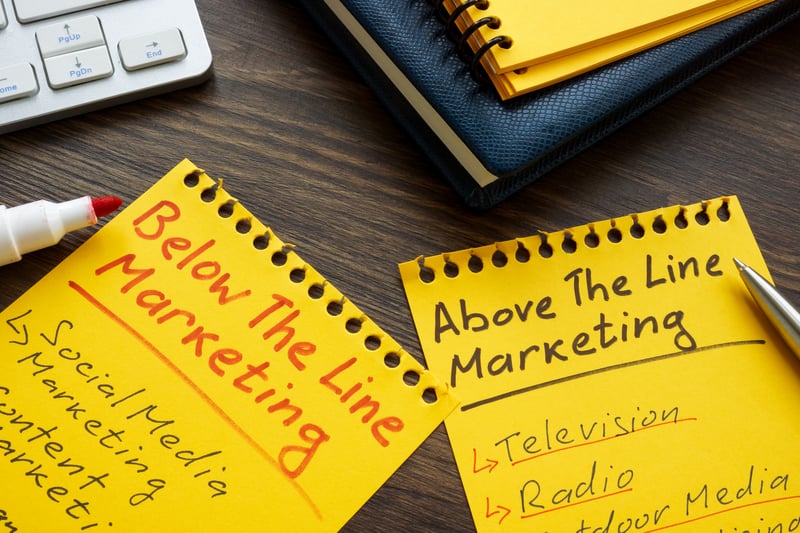
ATL, BTL, and TTL are three powerful ways to structure your marketing strategy. ATL builds awareness, BTL drives measurable engagement, and TTL combines everything into a seamless customer journey. When paired with tools like Ringy CRM, you unlock the ability to automate follow-ups, personalize communication, and track campaign performance from end to end.
If you want to build stronger, smarter marketing campaigns, combining all three approaches will help you reach audiences more effectively and convert them with confidence.
And with the help of our sales software CRM, you'll be able to drive engagement and track conversions every step of the way.
Request a demo to discover how we're transforming sales, one customer at a time.

Skyrocket your sales with the CRM that does it all.
Calling? Check. SMS? Check. Automation and AI? Check. Effortlessly keep in touch with your customers and boost your revenue without limits.

Related Articles