
 Updated on
 By Rob Marquez
Table of Contents

Are you stuck dealing with dropped calls, clunky phone systems, and customers who hang up before they ever reach an agent? If your call center still runs on traditional phone lines, you're burning money and losing business every single day.
These legacy systems lack the flexibility required for modern remote work, often tethering your team to physical desks and expensive hardware that is prone to outages. By failing to integrate with digital tools like CRM software and automated call routing, you are missing critical opportunities to streamline your workflow and provide the seamless, high-speed support your customers now expect.
Key Takeaways:
- A VoIP Call Center Replaces Traditional Phone Lines: With internet-based calling, VoIP call centers slash hardware costs, and long-distance charges are eliminated while giving your team access to advanced features like call recording, local presence dialing, and real-time analytics.
- Setting up is Simple: Setting up a VoIP-based call center often requires nothing more than a stable internet connection, headsets, and the right software. You can have agents making calls within hours rather than weeks, and scaling up means adding user accounts instead of running new phone lines through your building.
- The Best VoIP Call Center Solutions in 2026 Bundle Calling With CRM and Automation Tools: This helps your team manage leads, track conversations, and automate follow-ups from a single platform. Ringy, for example, offers distinct strengths depending on whether you prioritize sales automation, enterprise features, or unified communications.
- Data From Your Voip System Becomes a Competitive Advantage: You can use data from your VoIP system to score leads, segment prospects, and identify which outreach strategies actually convert.
What is a VoIP Call Center?
A VoIP call center is an IP-based telephone system that uses the Internet to make and receive calls. It has many features like advanced audio and video capabilities, automated voice messages, real-time analytics, caller ID information, and more. All this helps to reduce costs while increasing productivity in the call center environment.
By harnessing Voice over Internet Protocol (VoIP) technology, call centers can leverage the power of the Internet to make and receive phone calls, streamlining operations and enabling efficient customer interactions. This innovative system eliminates the need for traditional phone lines, replacing them with internet connectivity.
The result? Significant cost savings, the flexibility to work from anywhere, and a feature set that helps agents deliver better customer experiences. Businesses using VoIP call center solutions aren't limited by geography either. Your agents in Denver can display a Miami area code when calling Florida prospects, building instant trust and familiarity.
Why Should VoIP Be Used for Call Centers?

Running a call center means constantly balancing efficiency against expenses. A VoIP call center phone system changes that equation entirely by reducing costs while expanding what your team can do.
Here's what you can expect when you switch to VoIP call center software:
1. Lower Costs
Traditional phone systems require expensive hardware, dedicated phone lines, and ongoing maintenance contracts. VoIP strips all of that away. Everything runs through software and your internet connection, so no hefty long-distance charges are eating into your margins.
Most VoIP providers offer flexible pricing that scales with your team. You pay for what you use. According to Tech.co's research, companies switching from legacy phone systems to VoIP save between 30% to 50% on communication costs.
For small sales teams and insurance agencies, those savings can mean the difference between breaking even on a lead campaign and turning a real profit.
2. Easy Setup
Remember spending weeks coordinating with phone companies to install new lines? Those days are gone. VoIP call center software involves a simple installation or web-based login. Within a few clicks, agents can start making calls.
Adding new team members is just as painless. Instead of running cables and configuring hardware, you create a new user account. That's it. No technician visits, no equipment orders, no downtime.
3. Easier to Manage a High Volume of Calls

Call centers live and die by their ability to handle volume. VoIP software includes intelligent call routing that directs incoming calls to the right agents based on:
- Agent availability and current workload
- Specific skills or product knowledge
- Customer priority level or account history
- Time of day and shift scheduling
This means VIP clients reach your best agents automatically, and calls are distributed evenly, so no one gets overwhelmed. According to a PwC Advisory Outlook, 59% of consumers say they'll stop doing business with a brand after multiple poor service experiences. Smart call routing directly protects your customer relationships.
4. Can Use Any Type of Device with a Microphone
Your agents aren't chained to a desk anymore. VoIP call center software works on smartphones, laptops, tablets, and traditional desk phones. An agent can take calls from their laptop during the morning, then switch to their phone during a lunch break without missing a beat.
This flexibility is especially valuable for insurance agents who split time between the office and the field. Picture closing a deal on your mobile while sitting in a coffee shop between client appointments. That's the kind of freedom VoIP provides.
5. VoIP Software Provides Actionable Data Insights
Data is the heartbeat of any successful sales operation. VoIP call center software gives you comprehensive reporting and analytics covering:
- Call volume and peak hours
- Average call duration and hold times
- Individual agent performance metrics
- Customer satisfaction scores and trends
- Lead source conversion rates
With this data, you can identify your best-performing agents and replicate their approach, spot underperforming lead sources before they drain your budget, and staff appropriately during peak call windows.
6. Access to Advanced Calling Features
Beyond basic calling, VoIP platforms pack features that traditional phone systems simply can't match:
- Click-to-Call: With a simple click, agents can initiate calls directly from their computer screen or CRM system. This streamlines the dialing process, saving time and eliminating manual errors.
- Call Recording: By automatically recording calls, you can capture important details, ensure compliance with regulations, and use the recordings for training. For instance, supervisors can review recorded calls to provide targeted feedback and improve agent performance.
- Local ID: VoIP call center software enables you to display local phone numbers to customers, regardless of your physical location. This local presence fosters trust and familiarity, increasing the likelihood of customers answering calls and engaging in conversations.
These advanced calling features empower your agents to deliver personalized and professional customer interactions, enhancing customer satisfaction and loyalty.
Steps for Setting Up A VoIP Call Center

Getting your VoIP call center running doesn't require a PhD in telecommunications. Follow these steps, and you'll be up and running quickly.
1. Test Your Network and Internet Connection
VoIP depends entirely on a stable internet connection. Before anything else, run a thorough network assessment. You need sufficient bandwidth, low latency, and minimal packet loss to maintain clear voice quality.
A good rule of thumb: each concurrent call requires roughly 100 Kbps of bandwidth in both directions. If you plan to have 20 agents on calls simultaneously, you'll need at least 2 Mbps of dedicated bandwidth just for voice traffic. Most business internet plans in 2026 handle this easily, but it's worth confirming before you commit.
2. Determine What Hardware is Needed
The hardware requirements for VoIP are surprisingly minimal:
- Quality headsets with noise cancellation for each agent
- Computers or laptops with reliable microphones and speakers
- VoIP adapters, if you're keeping existing desk phones
- A router that supports Quality of Service (QoS) prioritization
Investing in good headsets pays for itself quickly. Clear audio means fewer misunderstandings, shorter calls, and happier customers.
3. Consider Using a Softphone
A softphone is a software application that turns any computer or mobile device into a fully functional phone. It eliminates the need for physical desk phones.
With a softphone, your agents can handle calls from anywhere with an internet connection. This opens the door to remote work, hybrid schedules, and hiring talent outside your local area. For small businesses watching every dollar, skipping desk phones and going straight to softphones can save thousands in upfront equipment costs.
4. Find the Right VoIP Provider
This is the decision that shapes everything else. You need a provider that matches your specific workflow. If you're running a sales-focused operation, look for platforms that combine calling with CRM and automation. If you're primarily handling inbound support, prioritize call routing and queue management.
Consider these factors when evaluating providers:
- Monthly cost per user and any hidden fees
- Available integrations with your existing tools
- Call quality and uptime guarantees
- Customer support availability (Ringy, for example, offers support seven days a week via phone, email, and webchat)
- Scalability as your team grows
And the statistics don't lie. Using CRM systems can offer significant benefits to companies, including a 300% increase in lead conversions, a boost in customer retention for 47% of companies that utilize it, and a 34% improvement in agent productivity. Impressive, right?
5. Set Up Call Routing and Workflows
Once your provider is in place, configure your call routing rules. Decide how incoming calls get distributed, set up IVR menus if needed, and create escalation paths for complex issues.
6. Train Your Team
Even the best software fails if your team doesn't know how to use it. Schedule hands-on training sessions, create quick-reference guides, and designate a go-to person for troubleshooting during the first few weeks.
3 VoIP Call Center Solutions
Choosing the right platform depends on your team size, budget, and whether you need a standalone phone system or an all-in-one sales tool. Here are three strong options for 2026:
1. Ringy
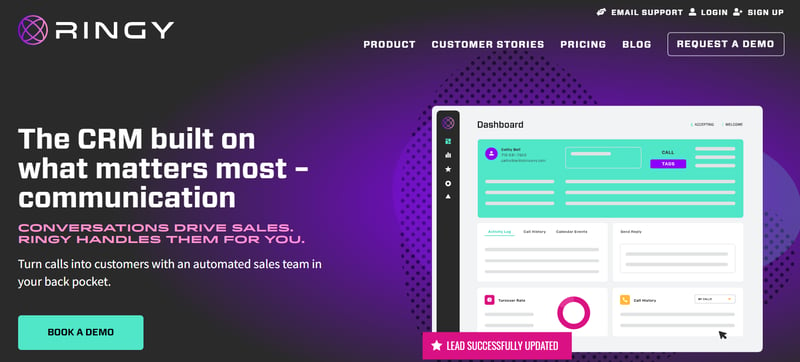
Ringy combines a full CRM with built-in VoIP calling, making it ideal for insurance agents and sales professionals who want everything in one place. Our platform includes a power dialer, local presence dialing, automated drip campaigns via email and SMS, and call recording.
Let's take a closer look at some of the key features:
|
Features |
Description |
|
High-quality VoIP calling system that ensures crystal-clear voice communication with customers. |
|
|
CRM Integration |
Seamless integration with our CRM software for streamlined workflows. |
|
Reporting and Analytics |
Robust reporting tools to track call metrics and agent performance, enabling data-driven decision-making. |
|
Ringy's mobile application allows agents to stay connected and manage calls on the go, improving productivity. |
|
|
Empowers agents to make and receive calls from any internet-connected device, enhancing flexibility and accessibility. |
Ringy is an exceptional VoIP call center solution due to its feature-rich platform and budget-friendly price point. Priced at only $119 per month, Ringy provides an all-in-one solution that caters to the unique needs of call centers without breaking the bank. Our seamless CRM integration and comprehensive reporting capabilities enable businesses to offer personalized customer experiences while optimizing agent performance.
2. Nextiva
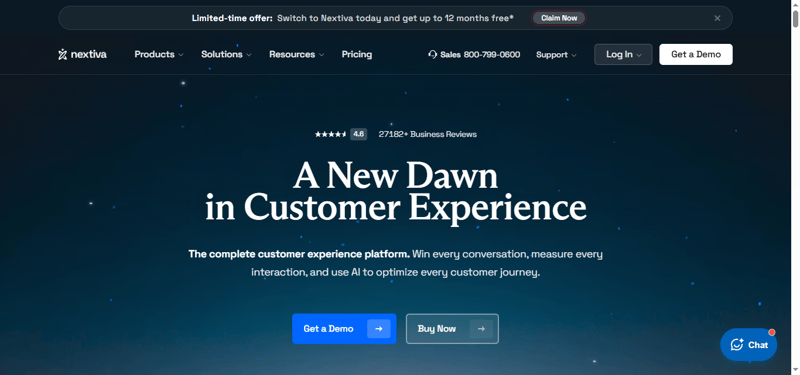
Nextiva is another top-tier VoIP call center software provider offering a reliable and scalable business solution. Here are Nextiva's standout features:
|
Features |
Description |
|
Call Routing |
Intelligent call routing to connect customers with the most suitable agents, reducing wait times. |
|
Real-Time Analytics |
Provides real-time insights into call center operations, enabling supervisors to make data-driven decisions. |
|
Advanced Call Queuing |
Efficiently manages call queues, ensuring fair distribution of calls and optimized agent availability. |
|
CRM Integration |
Seamlessly integrates with popular CRM systems, allowing for streamlined customer information access. |
3. Twilio Flex
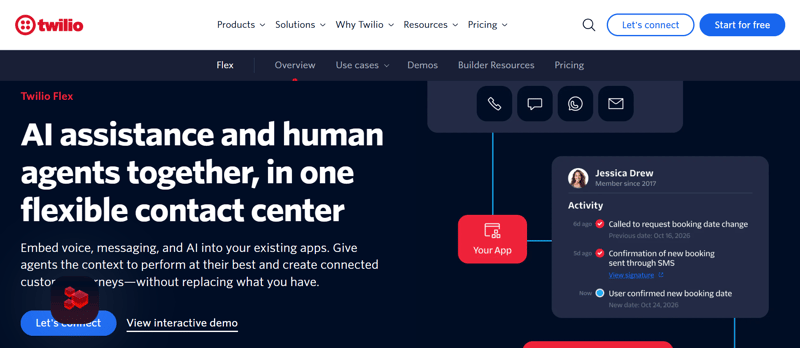
Twilio Flex is a flexible and programmable cloud-based contact center platform that offers powerful customization options. Here are some of Twilio Flex's notable features:
|
Features |
Description |
|
Customizable UI |
A fully customizable user interface that allows businesses to tailor the contact center to their needs. |
|
Multi-Channel Support |
Enables handling of various communication channels, including voice, SMS, email, and social media. |
|
Task Routing |
Dynamically routes tasks to the most qualified agents, improving efficiency and customer satisfaction. |
|
Developer-Friendly |
Offers a wide range of APIs and tools for developers to create custom integrations and applications. |
FAQs About VoIP Call Centers

Here are some frequently asked questions about VoIP call centers:
How much bandwidth do I need for a VoIP call center?
Plan for roughly 100 Kbps per concurrent call. A team of 15 agents needs at least 1.5 Mbps of dedicated bandwidth for voice traffic alone.
Can I keep my existing phone numbers?
Yes. Most VoIP providers support number porting, so you can transfer your current business numbers to the new system without disruption.
Is VoIP reliable enough for a busy call center?
With a solid internet connection and a reputable provider, VoIP call quality matches or exceeds traditional phone lines. Most major providers guarantee 99.99% uptime in their service level agreements.
What happens if my internet goes down?
Good VoIP platforms include failover options like automatic call forwarding to mobile phones or alternate numbers. This keeps your operation running even during outages.
Is the VoIP system secure?
Yes, VoIP systems are as secure as traditional telephone lines. They use the latest encryption protocols to ensure secure communication and protect user data.
Conclusion
The gap between businesses using modern VoIP call center tools and those clinging to legacy systems gets wider every year. Your competitors are already making more calls, responding to leads faster, and spending less on phone bills.
The most successful sales teams in 2026 aren't just adopting better technology. They're using it to create genuine human connections at scale, making every prospect feel valued and understood rather than processed through a system.
If you're ready to consolidate your calling, lead management, and follow-up automation into a single platform, get started with Ringy. It's built specifically for sales professionals and insurance agents who need to move fast without letting prospects slip through the cracks.

Skyrocket your sales with the CRM that does it all.
Calling? Check. SMS? Check. Automation and AI? Check. Effortlessly keep in touch with your customers and boost your revenue without limits.

Related Articles










.jpg)




.jpg)








.jpg)