
 Updated on
 By Rob Marquez
Table of Contents

Cloud contact center providers serve as the essential infrastructure for modern, distributed customer engagement. For sales leaders and insurance agency managers overseeing remote teams, these platforms are no longer optional; they are the strategic engine that drives productivity.
Transitioning to a cloud-based architecture replaces the rigid constraints of legacy hardware with fluid, scalable workflows. This technology ensures that whether your agents are in a central office or working from home, they have the unified tools necessary to convert leads and resolve inquiries efficiently, turning potential operational chaos into a streamlined, high-performance machine.
Key Takeaways
- Cloud Contact Centers Eliminate Geographic Limits on Your Workforce: A cloud-based contact center lets your agents, managers, and support staff work from anywhere with an internet connection. For insurance agencies and small sales teams, this means you can hire talent nationwide without worrying about office space.
- API Management Is the Engine Behind a Truly Connected Contact Center: APIs allow your CRM, dialer, analytics tools, and communication channels to share data in real time, so agents get full prospect histories the moment a call connects. This kind of connectivity is what separates a basic phone system from a complete cloud contact center solution that actually drives revenue.
- Choosing the Right Provider Shapes Your Team’s Daily Experience: Not every cloud contact center platform fits every business. The five recommendations in this guide cover solutions ranging from all-in-one CRM-dialer combos to enterprise-grade platforms, so you can match features to your team's size, budget, and workflow. The best provider is the one your agents will actually use every day without friction.
What Is a Cloud Contact Center?

A cloud contact center is a virtual hub that connects customers with agents, all powered by cloud-based software. This approach offers organizations real advantages in flexibility, cost management, and reach, and that's just the starting point.
Unlike traditional VoIP phone systems, cloud-based call center software excels at managing client connections across multiple communication channels, including:
- Social media platforms
- SMS and text messaging
- Phone calls
As organizations expand their support channels, cloud call center solutions become essential for addressing customer inquiries while keeping agent productivity high.
An on-premise system ties you to a specific server and physical location. A cloud-based call center phone system doesn't. Anyone on your team can access it from anywhere: mobile phone, tablet, or laptop. For insurance agents working from home offices or sales reps on the road, that kind of access isn't a luxury. It's a requirement.
Benefits of Cloud Contact Center Software
The advantages of cloud contact center software go well beyond remote accessibility. From real cost reductions to giving agents better tools, the benefits stack up quickly for companies of all sizes.
1. Reduced Costs
Budget matters, especially for small sales teams. Cloud contact center providers have changed how businesses think about infrastructure spending.
You don't need massive upfront hardware investments. Instead, most providers offer a "pay as you go" subscription model that lets you scale costs with your actual usage.
Cloud call center pricing also lets you test-drive a solution through a free trial before committing, so you're not gambling with your budget.
2. Remote Team Support
Remote and hybrid work isn't going anywhere. Cloud contact centers have become the lifeline for businesses looking to build teams across cities, states, or even countries.
Cloud-based contact center solutions offer quick setup and give agents real flexibility. Your team gets instant access to:
- Performance reports and dashboards
- Customer data and interaction history
- Processing resources and call tools
This means you can deploy employees virtually anywhere in the world and still maintain round-the-clock customer support. For an insurance agency with agents spread across multiple states, this is the difference between a fragmented operation and a unified team.
3. Improved Agent Efficiency
Agents find greater versatility in working conditions and experience tremendous efficiency when using a cloud solution. An intuitive user interface allows them to handle customer data across various channels, leading to more precise case resolutions.
Here are a few efficiency benefits:
- Agents can resolve cases with heightened precision.
- Features like ACD, IVR, and prioritized callbacks save valuable employee time.
- Efficient call routing ensures callers are connected with the most qualified agents for an exceptional client experience.
Incorporating these efficiency-boosting elements fosters a more productive and effective work environment for contact center agents utilizing cloud solutions, ultimately improving client retention rates and loyalty.
Cloud Contact Center API Management

Efficient API management is the unsung hero of any strong cloud contact center platform. This process involves developing, designing, monitoring, testing, securing, and analyzing APIs so they fit your business's specific needs.
Cloud contact center API management also ensures compliance with data privacy regulations and internal corporate policies. These management platforms can be hosted on-premises, in the cloud, or in a hybrid environment, giving you real deployment flexibility.
Here's why API management matters:
|
Benefit |
Description |
|
Data-Driven Insights |
Access real-time and historical data for in-depth analysis, reporting, and informed decision-making. |
|
Scalability |
Adapt to changing demands by adding or removing functionalities as needed, ensuring operational flexibility. |
|
Automation Efficiency |
Automate processes like call routing and IVR systems, optimizing workflows and enhancing customer experiences. |
API management lets companies build highly adaptable, efficient customer service environments. These platforms connect with various tools and vendors, so your team can deliver strong buyer experiences while keeping operations tight.
What Is an API?
API stands for application programming interface. It's the mechanism that lets different software applications, platforms, and systems talk to each other. It creates interoperability between technologies that need to work together.
If your CRM needs to pull data from your dialer, or your analytics tool needs call logs from your contact center, APIs make that happen. Check out our article on CRM APIs for a deeper look at how this works.
Why Are APIs Important to Cloud Contact Center Providers?
APIs aren't just tech jargon but the linchpin of cloud contact center success. APIs do everything from enabling integration with existing tech stacks to facilitating real-time data exchange and incorporating cutting-edge AI technology.
Application programming interfaces play a pivotal role in the success of cloud contact centers.
Here are three reasons APIs are critical:
- They let you connect apps in your tech stack to the cloud contact center software. You can integrate data analytics tools, ERP systems, CRM software, or custom applications into your contact center infrastructure, creating a unified customer service ecosystem.
- APIs enable real-time data exchange. When a customer contacts your call center, the API fetches their history so agents can offer personalized help without delay. According to research, 81% of customers expect agents to offer personalized experiences and know their history when they call.
- APIs make it possible to integrate AI-driven chatbots that handle routine queries, freeing your human agents to focus on complex, high-value conversations.
For a busy insurance agency fielding hundreds of calls daily, that real-time data pull is the difference between a frustrated prospect and a closed deal.
On-Premise vs. Cloud Contact Center

Choosing between an on-premise and a cloud contact center can significantly impact your organization's operational efficiency, flexibility, and overall customer service capabilities.
Below, we've outlined a comparative table highlighting the key differences between these two approaches.
|
Aspect |
On-Premise Contact Center |
Cloud Contact Center |
|
Upfront Infrastructure Investment |
Requires substantial upfront hardware costs |
Minimal to no upfront hardware expenses |
|
Maintenance and Upgrades |
The responsibility of the organization, support staff, or dedicated IT team. |
Automatic updates and maintenance by the cloud contact center provider |
|
Scalability |
Limited scalability, often requiring significant effort to expand |
Scalable on-demand easily adapts to the changing needs of your business |
|
Remote Work |
Operates from a fixed location, limiting remote work options |
Supports remote work, providing flexibility for agents, managers, and business owners |
|
IT Resource Requirements |
May require more IT resources for management and support |
Low IT resource requirements, reducing operational overheads |
|
Disaster Recovery Capabilities |
Limited disaster recovery capabilities |
Built-in disaster recovery and data backup |
|
Deployment Time |
May have longer deployment times |
Rapid deployment and easy onboarding |
Cloud contact center providers present compelling reasons for modern businesses to adopt them.
However, the choice ultimately depends on your unique requirements, but it's evident that cloud contact centers are charting the course toward customer service excellence in the years to come.
5 Recommendations for Best Call Center Software Solutions

When selecting the best cloud contact center software, it's essential to consider industry leaders who have consistently proven their worth.
Here are our five top contact center solutions to help take your company to the moon!
Ringy
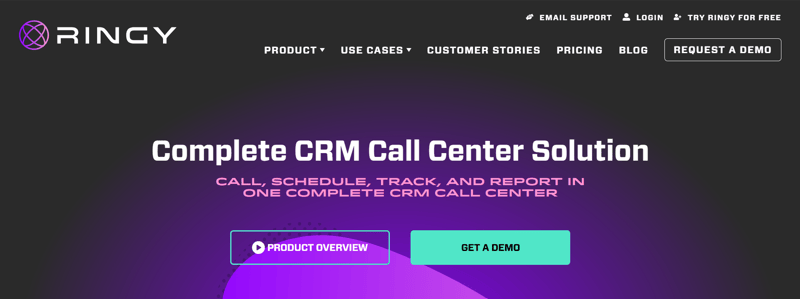
Ringy is a strong choice for insurance agents and small sales teams who need an all-in-one platform. Rather than juggling separate tools for calling, texting, email, and lead management, Ringy puts everything in one place.
Key features that help sales teams grow:
- Real-time insights and reports for tracking agent performance
- Built-in power dialer with local presence dialing (area code mapping)
- Automated drip campaigns via email, SMS, and voicemail drops
- Free personalized onboarding and setup with customer success support seven days a week
Ringy users typically see a 12-48% increase in sales, largely because automation keeps agents in constant contact with prospects instead of letting leads sit in a spreadsheet. The platform starts at $119/month, making it accessible for teams watching their budget.
Zendesk
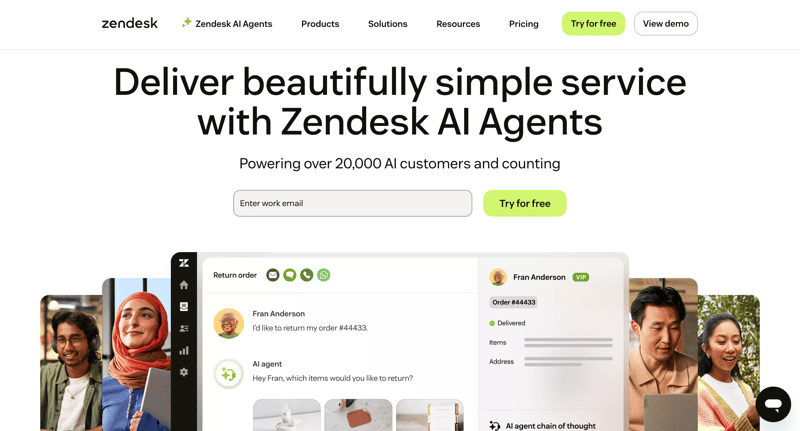
Zendesk is a strong contender in the cloud contact center providers market, with a solid reputation for reliability and a focus on providing seamless customer support experiences. While it may not offer the extensive feature set of Ringy, Zendesk shines in its simplicity and ease of use.
It's an excellent choice for businesses seeking a dependable cloud contact center provider with no overwhelming complexities.
Besides a reliable customer support team, Zendesk has multi-channel capabilities, enabling you to monitor interactions at various levels and touch points. Zendesk's dedication to delivering top-notch customer support aligns well with organizations looking for straightforward, effective call center software solutions.
Talkdesk
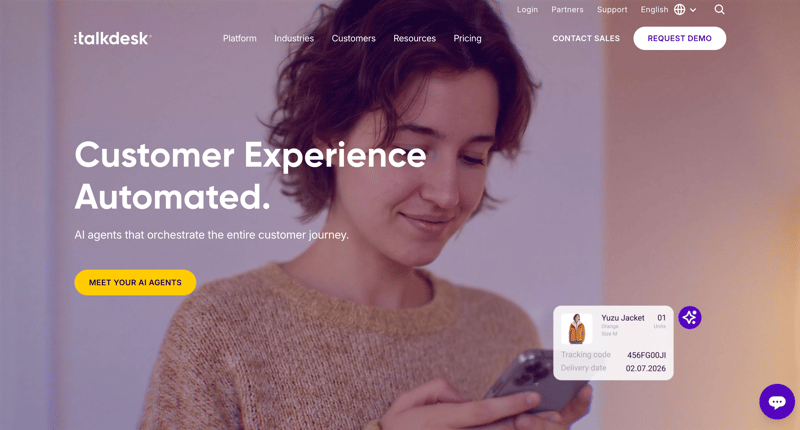
This software is known for its robust capabilities and user-centric approach. It provides a smooth experience for customers and agents, with features that every call center requires.
Talkdesk's key features include:
- Integrations with popular business tools
- Advanced analytics
- Intelligent call routing
For companies seeking a cloud contact center provider that prioritizes customer satisfaction and agent efficiency, Talkdesk becomes a considerable choice.
Five9
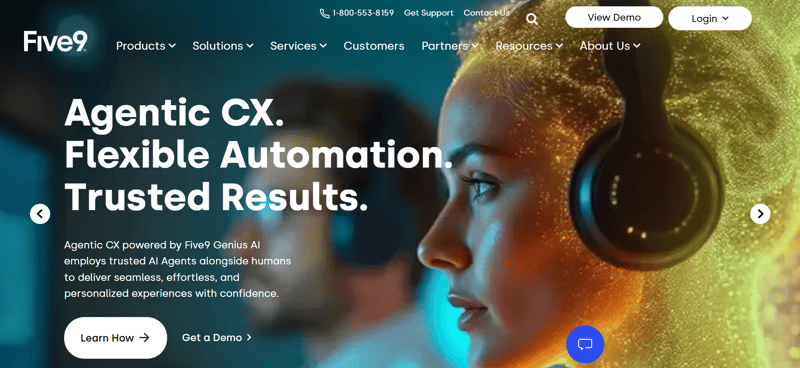
Five9 distinguishes itself with its advanced analytics and reporting capabilities. This solution is an excellent fit for data-driven organizations aiming to optimize their call center performance.
All the insights needed to make informed decisions and improve customer interactions can be found within Five9's dashboard.
The platform includes features such as:
- Speech analytics
- Advanced analytics and reporting
- Predictive dialing
- Mobile app
While Five's comprehensive features and emphasis on analytics sound fantastic, it may need to be more robust to compete with our in-depth reporting tools.
Another thing to consider is that Five9's pricing structure would predominantly suit larger and established companies, making it an enterprise cloud call center solution.
8x8
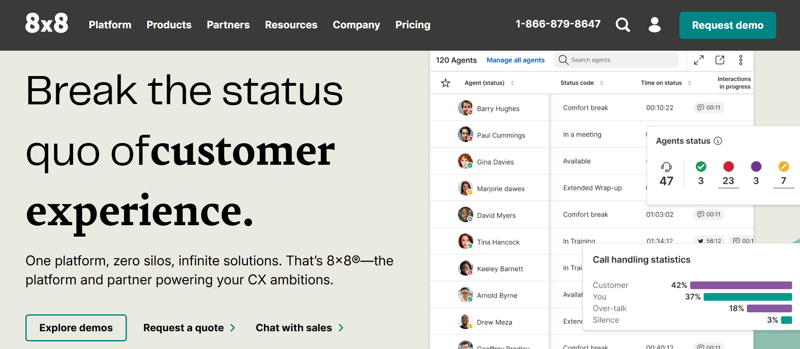
This platform offers various communications tools extending beyond call center functionality. Much like Ringy, it's an excellent choice for companies looking for an integrated solution for voice, chat, and contact center capabilities.
While less specialized than Ringy in certain aspects, 8x8's versatility makes it a strong contender for organizations seeking to consolidate their communication technologies.
Some key features of 8x8 include, but are not limited to:
- SMS
- Automated call distribution
- Call recording
- Automated call attendant
For companies aiming to streamline their communication and collaboration efforts across various channels, the 8x8 cloud contact provider offers a complete solution.
Cloud Contact Center Providers - Final Thoughts
The most successful sales teams and agencies in 2026 aren't just picking the flashiest technology. They're choosing platforms that balance powerful automation with genuine human connection, making every prospect feel valued and understood.
Your cloud contact center should eliminate busywork, not create it. It should free your agents to do what they do best: build relationships, answer real questions, and close deals. Whether you're an insurance agency with five agents or a growing sales operation with fifty, the right provider turns your phone system from a cost center into a revenue driver.
If you're looking for a platform that combines CRM, power dialing, automated follow-ups, and lead management in one place, Ringy is worth a serious look. Request a Demo to see how it fits your team's workflow.

Skyrocket your sales with the CRM that does it all.
Calling? Check. SMS? Check. Automation and AI? Check. Effortlessly keep in touch with your customers and boost your revenue without limits.

Related Articles












.jpg)

.jpg)





















.jpg)