 Updated on
 By Carlos Correa
Table of Contents

Most leads do not ghost you because your product is bad. They ghost you because nobody followed up. A product funnel is the system that makes sure that never happens. This article covers what a product adoption funnel is, how to measure it, how to build one and how to make sure yours is actually doing the work it is supposed to do.
Key Takeaways:
- A product launch funnel maps the journey from stranger to buyer and beyond
- Product funnels and sales funnels are related but serve slightly different purposes depending on context
- The metrics that matter change at each stage of the funnel
- Building a product development funnel that works means automating follow-up so nothing falls through the cracks
- Ringy brings your pipeline, outreach and reporting together so your funnel runs even when you are not watching it
What Is a Product Funnel?
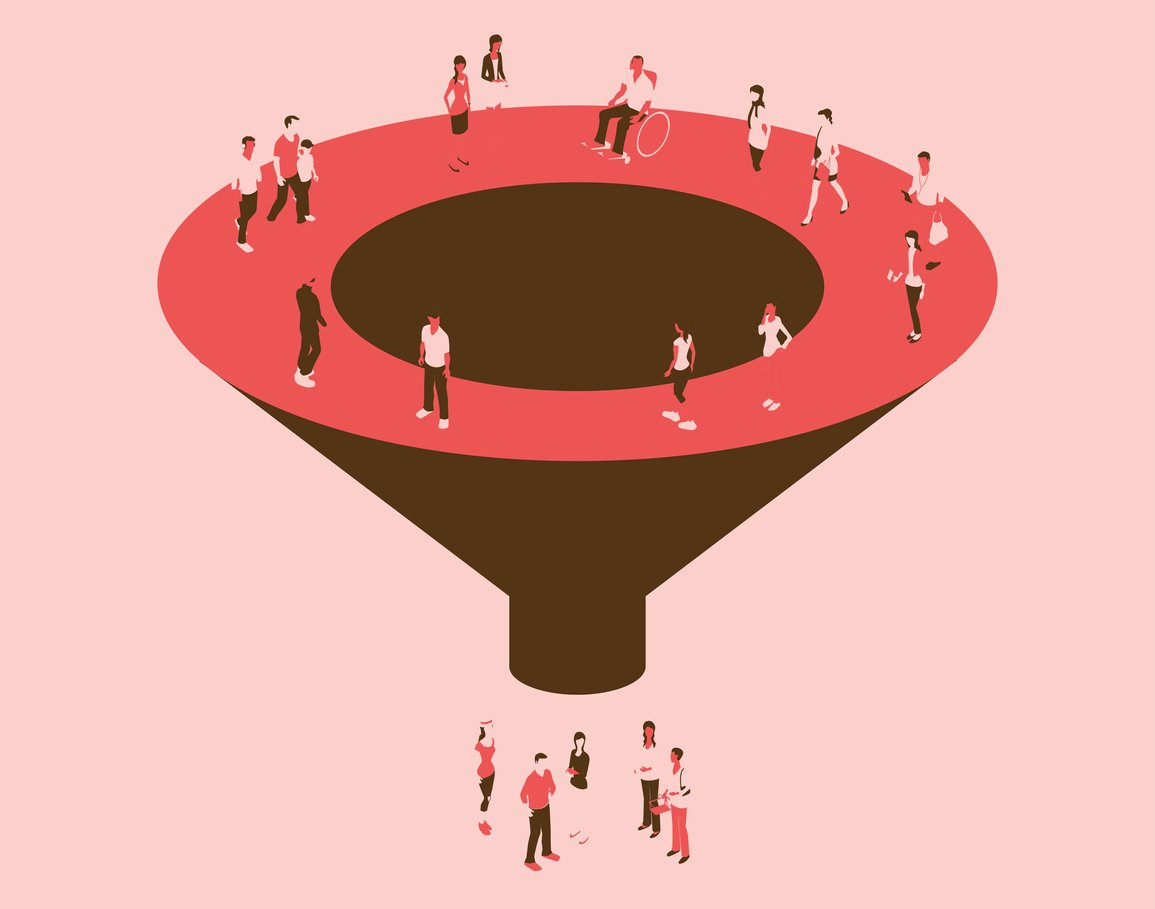
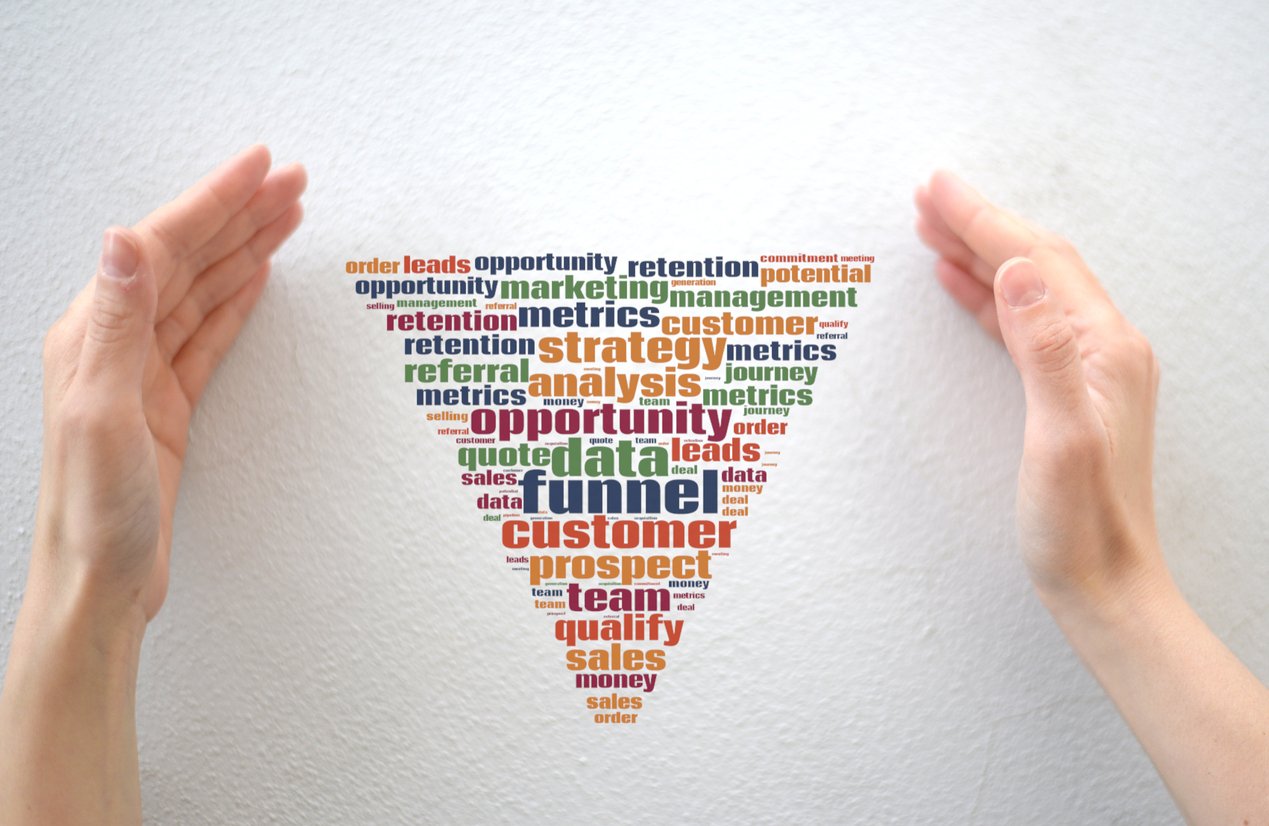
A new product development funnel is a framework that maps the journey a prospect takes from first becoming aware of your product to making a purchase and ideally becoming a loyal repeat customer. It visualizes how a wide pool of potential buyers narrows at each stage as people drop off, opt out or simply go quiet.
The idea is not new.
Advertising pioneer Elias St. Elmo Lewis laid the groundwork for funnel thinking all the way back in 1898 when he outlined the principles of attracting attention, generating interest and creating desire, what we now recognize as the AIDA model.
As HubSpot's breakdown of the AIDA model explains, those four stages have remained foundational to sales and marketing thinking for over a century precisely because human buying behavior has not fundamentally changed. People still need to know you exist before they can want what you sell.
For sales reps, insurance agents and agency owners who live and die by volume prospecting, a product funnel is not an abstract marketing concept. It is the operating system behind every dialing session, every drip sequence and every pipeline report. Whether you are running a digital product funnel for an online course or a physical product sales funnel for insurance policies, the underlying logic is the same: get people in at the top and convert as many as possible on the way down.
Product Funnel vs. Sales Funnel: What's the Difference?

People use these terms interchangeably, and honestly, for most sales-focused audiences, that is fine.
But it is worth understanding the technical distinction so you can use the right lens for whatever problem you are trying to solve.
A product sales funnel is primarily about moving someone from stranger to buyer.
It tracks the customer journey through:
- Awareness
- Interest
- Consideration
- Purchase
This is the product marketing funnel most sales teams live in every day.
A product innovation funnel in the product management sense extends past purchase into activation, retention and advocacy.
It asks not just whether someone bought but whether they actually:
- Used the product
- Got value from it
- And came back
This is the version that product teams and SaaS companies obsess over.
For Ringy's audience, both matter, but you will spend most of your time thinking about the first. The second becomes relevant the moment you start thinking about churn, upsells and lifetime value.
A digital product sales funnel adds another layer. If you are selling something delivered digitally, whether that is a parenting book, a software subscription or an online training program, your funnel will lean heavily on email sequences, landing pages and automated delivery. Compare that to a product sales funnel for a physical product or an insurance policy, where phone calls, local presence dialling, and personal follow-up do most of the heavy lifting.
Same funnel logic, very different touchpoints.
The table below breaks down the key differences side by side so you can quickly identify which version applies to your business.
|
Feature |
Product funnel |
Sales funnel |
|
Focus |
Full customer lifecycle including post-purchase |
Prospect to buyer journey |
|
Primary owner |
Product team or customer success |
Sales team |
|
Key stages |
Awareness, acquisition, activation, retention, advocacy |
Awareness, interest, consideration, decision, purchase |
|
Primary metrics |
Retention rate, activation rate, NPS, churn |
Conversion rate, close rate, CAC, pipeline value |
|
Typical context |
SaaS, digital products, subscription businesses |
Insurance, field sales, agency, B2B, ecommerce |
What this table makes clear is that the funnel does not end at the sale. For businesses where retention and renewals drive revenue, the post-purchase stages are just as important as getting someone to sign in the first place.
Product Funnel Metrics: What to Actually Measure

Here is an uncomfortable truth: according to research cited by Khris Digital, 79% of leads never convert due to lack of proper nurturing. That is not a lead quality problem. That is a measurement and follow-up problem. You cannot fix a leak you have not found, and you cannot find a leak you are not measuring.
The metrics that matter change depending on where you are in the funnel. Here is how to think about each stage.
Top-of-Funnel Metrics
Top-of-funnel is all about reach and first contact. The numbers you care about here are:
- Impressions and reach: how many people are actually seeing your outreach or content
- Click-through rate (CTR): what percentage take the first action you ask for
- Cost per lead (CPL): what you are paying to bring someone into the funnel at all
For outbound sales teams, this might mean dials made and answer rates. For agents running paid campaigns, it means ad impressions and lead form completions. Either way, the question is the same: are enough people entering the funnel to give you a realistic shot at your targets?
Mid-Funnel Metrics
Mid-funnel is where most funnels quietly fall apart. A lead enters and then just... sits there.
The metrics that tell you whether your middle is healthy include:
- Lead-to-opportunity conversion rate: how many leads turn into genuine prospects worth pursuing. A low rate here means you're talking to the wrong people or your initial qualification criteria are too loose.
- Email and SMS open rates and reply rates: are your follow-up sequences actually landing? If these are dismal, your messaging is either irrelevant or your communication cadence is nonexistent.
- Time-in-stage: how long are leads lingering before moving forward or going cold?
Time-in-stage is one of the most underused metrics in sales. A lead sitting in the same stage for three weeks is not a warm lead. It is a sign of a broken follow-up process, a sales rep who's juggling too much, or an offer that isn't compelling enough to justify the next step. If your average time-in-stage is measured in weeks instead of days, you are actively losing momentum and revenue.
Bottom-of-Funnel Metrics
This is where revenue lives. The numbers here are:
- Close rate and win rate: the percentage of opportunities that actually turn into customers
- Customer Acquisition Cost (CAC or CPA): what it costs you to win each new customer
- Average deal size and revenue per customer: the economic value of what is closing
Retention Metrics
If your business model includes renewals, upsells, or ongoing customer relationships, these performance indicators reveal more than just immediate conversion; they provide a comprehensive view of whether your product funnel is functioning optimally to drive long-term customer value, retention, and sustained revenue growth.
Here's how:
- Churn rate: How many customers are leaving and how fast
- Net Promoter Score (NPS): How likely customers are to recommend you
- Customer Lifetime Value (CLV or LTV): The total revenue a customer generates across their relationship with you
Research from Marketing LTB found that businesses with automated funnel workflows convert 53% more leads than those relying on manual processes. That gap widens even further when you look at retention. Funnels that keep working after the sale are the ones that compound into real revenue growth.
Putting It All Together: Building Your Product Funnel From Scratch

Knowing what a product funnel is and actually building one that works are two very different things.
Here is a practical five-step process for getting yours off the ground without overcomplicating it.
Define Your Stages Based On Your Actual Sales Process
Do not just copy a template. Sit down and map the stages to how your prospects actually behave in real life. Think about the last ten deals you closed. What steps did every single one of them go through? What actions consistently preceded a conversion?
A five-stage product funnel that reflects your real workflow beats a ten-stage funnel you will never maintain. The goal is clarity not comprehensiveness. If you cannot describe what it takes for a lead to move from one stage to the next, your funnel is not a funnel. It is a wish list.
If you want a deeper look at how to structure this, our guide to funnel management walks through the mechanics of building a funnel that actually gets used.
Pick One To Two Metrics Per Stage To Track Consistently
Tracking too many metrics leads to tracking nothing effectively. The most crucial step is to select only the one or two key performance indicators per stage of your product funnel that provide the clearest and most direct signal of forward movement, and consciously disregard all other numbers for the time being.
- For the mid-funnel stage, a high-leverage metric could be the reply rate on your automated SMS sequence, as this directly indicates engagement and potential interest in the next step.
- For the bottom-of-funnel stage, a clear indicator of sales pipeline health is the number of demos completed per week, which correlates closely with potential deals.
It is vital to avoid vanity metrics, such as total social media impressions, website traffic, or overall social media reach.
While these numbers can boost morale, they are poor predictors of success because they do not reliably tell you whether your product funnel is successfully generating revenue or moving leads toward a purchase. Focus exclusively on metrics that directly correlate with a lead progressing to the next stage of the funnel and ultimately converting into a customer.
Set Up Automation For Follow-Up At Every Stage
Every stage in your funnel should have a triggered action. A lead enters a new stage, and something happens automatically. A message goes out. A task is created. A rep gets notified. No prospect should ever just sit idle waiting for someone to remember to follow up.
According to Cropink's research on funnel performance, companies that excel at lead nurturing generate 50% more sales-ready leads at 33% lower cost. That is not magic. That is what consistent automated follow-up actually produces over time.
Our software's automated SMS and email drip campaigns are built exactly for this. You set the sequence once, and every lead gets the right message at the right stage without anyone having to manually remember to send it.
Run a Monthly Funnel Review and Fix Your Biggest Leak First
Every month, look at your funnel and find the stage with the highest drop-off rate. That is your one priority for the month. Not two priorities. Not a full overhaul. One fix.
This is where funnel optimization thinking pays off. One well-executed fix per month compounds fast. If you address a mid-funnel drop-off and lift your lead-to-opportunity conversion rate by even five percentage points, that gain flows through to every stage below it. Small targeted improvements beat big messy overhauls every time.
Use Tools That Do The Work For You
The best product funnel in the world still needs a system behind it. Spreadsheets break down. Manual follow-up gets forgotten. Data stored in five different places means no one has the full picture when it matters most.
Ringy's pipeline management gives you a stage-based view of every lead in real time so you know exactly where each prospect sits and what needs to happen next. Call logs, local presence dialing, automated drip campaigns and CPA tracking all live in one place. Your funnel should be generating follow-ups, warming leads and surfacing hot prospects even when you are off the clock.
As our guide to sales funnels explains, combining automation with the right system is what turns a pipeline from a tracking exercise into an actual conversion machine.
You also get sales funnel conversion rate benchmarks to compare your numbers against industry standards so you know whether your funnel is performing well or whether something needs attention.
Turn Your Product Funnel Into a Key Conversion Tool

A great product funnel is not built in a day. It gets refined through monthly reviews, small targeted fixes and a willingness to let the data tell you where the problems actually are rather than where you think they might be.
What makes the difference between a product funnel that sits in a slide deck and one that actually generates revenue is the system behind it. Clean data, automated follow-up, consistent measurement and a platform that holds it all together. When those things are in place, the funnel runs itself, and the results tend to follow.
If you are tired of chasing leads manually and wondering where your pipeline is leaking, Ringy was built for exactly this.

Skyrocket your sales with the CRM that does it all.
Calling? Check. SMS? Check. Automation and AI? Check. Effortlessly keep in touch with your customers and boost your revenue without limits.

Related Articles