 Updated on
 By Carlos Correa
Table of Contents

Client prospecting is the foundation of every successful sales strategy. Without a steady flow of qualified leads, even the best sales teams struggle to maintain consistent revenue growth. Modern businesses now rely on automation, personalization, and data-driven outreach to simplify prospecting and improve conversions.
This guide explains what client prospecting is, how to create a repeatable prospecting process, and how automation platforms like Ringy help businesses streamline outreach, follow-ups, and pipeline management.
Key Takeaways
- Client Prospecting Requires Strategy: Effective client prospecting starts with defining your ideal customer profile, identifying high-intent leads, and using multiple outreach channels to build relationships over time.
- Automation Improves Consistency: Automated workflows, reminders, and CRM integrations help sales teams avoid missed follow-ups and maintain consistent communication with prospects.
- Personalization Increases Engagement: Generic outreach often gets ignored. Personalized emails, calls, and SMS campaigns improve response rates and create stronger client relationships.
- Metrics Drive Better Prospecting Results: Tracking conversion rates, response rates, and pipeline activity helps businesses identify what works and optimize their sales process.
- Ringy Simplifies Prospecting Workflows: Ringy combines sales automation, contact management, call tracking, and multi-channel communication into one centralized platform for more efficient prospecting.
What Is Client Prospecting?
Client prospecting is the process of identifying, researching, and contacting potential customers who may benefit from your products or services. The goal is to move qualified leads through the sales pipeline and convert them into paying clients.
The client prospecting meaning goes beyond cold outreach. It involves understanding customer pain points, building relationships, and creating a repeatable system for lead generation and follow-up. Businesses in industries like insurance, SaaS, and financial services client prospecting rely heavily on structured prospecting workflows to maintain predictable growth.
What Is the First Step in Client Prospecting?

Successful client prospecting begins with preparation. Before reaching out to prospects, businesses need a clear understanding of who they want to target and why those prospects are likely to convert.
Build Your Ideal Client Profile
The answer to what is the first step in client prospecting is simple. Define your ideal client profile (ICP).
Your ICP should outline:
- Industry
- Company size
- Budget range
- Common pain points
- Decision-makers
- Geographic location
For example, a financial advisor focusing on financial services client prospecting may target high-income professionals nearing retirement. Meanwhile, a SaaS business may prioritize companies with growing remote teams.
Using CRM platforms like Ringy makes it easier to organize prospect data and segment leads based on demographics, behaviors, and engagement history.
Identify High-Intent Prospects
Once your ICP is set, look for high-intent triggers. These are signals that a prospect is actively looking for a solution. Triggers include recent company funding rounds, executive hiring sprees, or interactions with your website content. Targeting high-intent prospects ensures you spend your energy where it is most likely to yield a return.
Creating a Client Prospecting Strategy
A successful strategy moves away from random acts of sales and moves toward a predictable system. It requires aligning your communication channels with your audience's habits and building a process that can be replicated daily.
Choose the Right Prospecting Channels
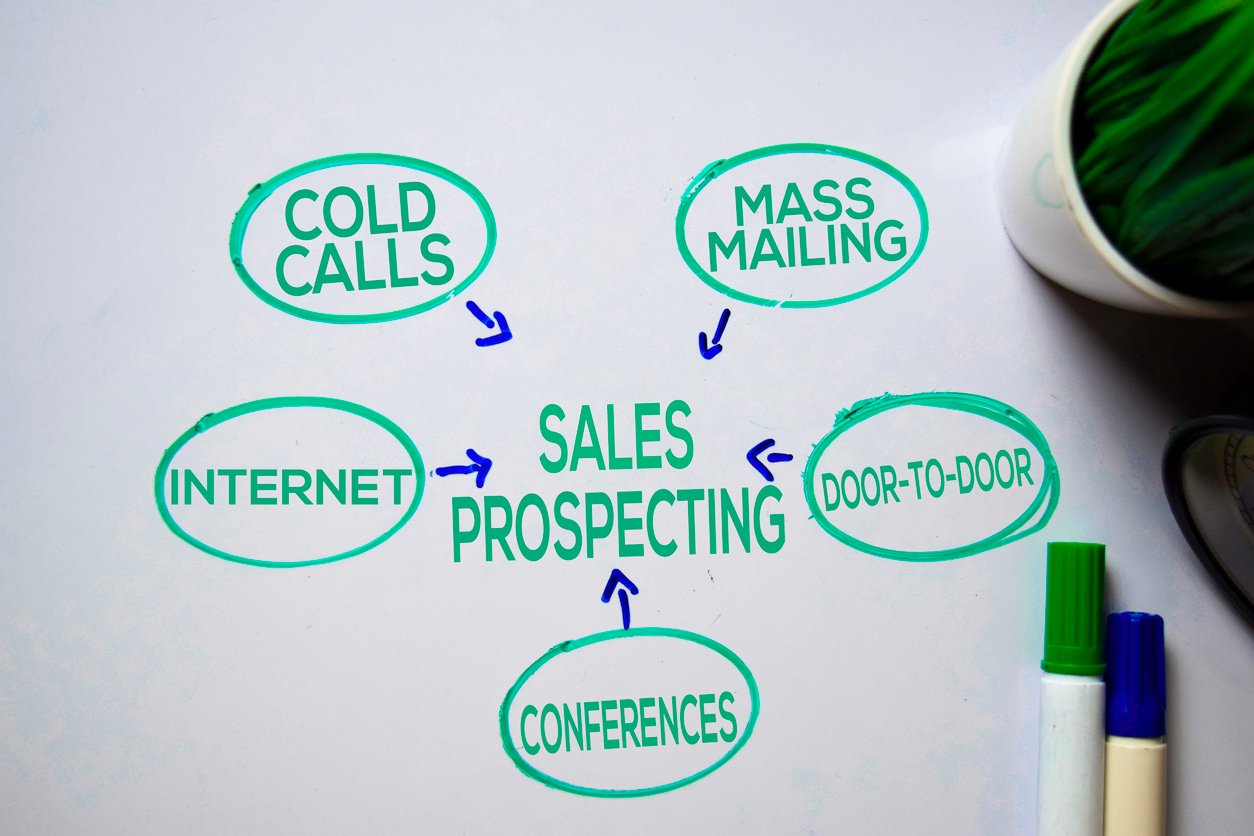
Not all channels are created equal. While B2B software companies thrive on LinkedIn and email, client prospecting insurance agents often find better success through localized direct mail, community networking, and targeted phone outreach.
|
Industry |
Primary Channels |
Secondary Channels |
|
B2B SaaS |
LinkedIn, Cold Email |
Webinars, Trade Shows |
|
Financial Services |
Referrals, Seminars |
LinkedIn Executive Outreach |
|
Insurance |
Local Networking, Cold Calling |
Direct Mail, Facebook Ads |
Build a Repeatable Outreach Process
Consistency matters in client prospecting. Research from Invesp shows that nearly 80% of sales require at least five follow-ups, yet many sales reps stop after one or two attempts.
Your outreach process should include:
- Initial contact
- Follow-up schedule
- Lead qualification checkpoints
- Meeting scheduling
- CRM updates
Ringy simplifies this process through automated reminders, email sequencing, and pipeline tracking, helping teams maintain momentum without manual effort.
How To Prospect Clients Step by Step

Once the strategy is in place, execution becomes a daily discipline. Here is how to efficiently move an individual prospect through your outbound sales funnel.
Step 1: Research Each Prospect
Never reach out completely blind. Spend a few minutes reviewing a prospect’s LinkedIn profile, company website, and recent news. Look for common ground, mutual connections, or recent business achievements you can reference. This contextual data proves you’ve done your homework and aren't just blasting a generic list.
Step 2: Write Personalized Outreach Messages
Personalization goes beyond using a tag to insert a first name. True personalization addresses a specific pain point relevant to the prospect's role. If you are executing financial services client prospecting, your message might address recent regulatory changes affecting their specific asset class, instantly establishing you as a knowledgeable peer.
Step 3: Follow Up Consistently
Following up is one of the most important parts of client prospecting. Many prospects may not respond immediately because they are:
- Busy
- Evaluating options
- Waiting for budget approval
- Prioritizing other projects
Consistent follow-ups keep your business visible without becoming intrusive. Effective follow-up methods include:
- Email reminders
- Phone calls
- SMS outreach
- LinkedIn touchpoints
Ringy automates much of this process using drip campaigns, call tracking, and workflow reminders.
How To Measure Prospecting Success
You cannot optimize what you do not measure. To ensure your prospecting efforts are yielding a positive return on investment, you must track specific performance indicators and constantly refine your approach.
Key Prospecting Metrics To Track
Monitoring the right metrics helps sales teams identify strengths and weaknesses.
Important prospecting KPIs include:
- Response rate
- Meetings booked
- Conversion rate
- Call volume
- Email open rate
- Follow-up completion rate
- Pipeline growth
For example, low response rates may indicate weak messaging, while low conversions may suggest poor lead qualification. With a CRM platform like Ringy, you can centralize these insights into easy-to-read dashboards to help you close deals effectively.
Optimize Your Prospecting Workflow
Optimization is an ongoing process. Businesses can improve client prospecting by:
- A/B testing subject lines
- Improving targeting criteria
- Adjusting follow-up timing
- Personalizing messaging
- Expanding multi-channel outreach
Automation also reduces repetitive administrative work, allowing sales reps to spend more time building relationships.
Tools That Simplify Client Prospecting

Modern sales teams cannot compete using spreadsheets alone. Specialized sales software eliminates manual friction, allowing reps to focus on building relationships rather than managing data.
Essential Features To Look For
When evaluating prospecting tools, look for platforms that centralize your operations. Key features include:
- CRM Integration: Seamless syncing ensures no lead falls through the cracks and data remains clean.
- Automation: Automated email cadences and text messaging save hours of manual labor daily.
- Call Tracking: Built-in dialers with call recording and analytics help managers coach reps effectively.
- Lead Scoring: Automatically prioritizes prospects based on their engagement levels and ICP fit.
- Pipeline Visibility: Visual dashboards give sales leaders a real-time look at the health of the sales funnel.
Why Businesses Use Ringy
Ringy serves as an all-in-one sales hub designed to simplify and supercharge your entire prospecting infrastructure. By combining robust sales automation with intuitive contact management, Ringy ensures your sales reps always know who to contact, when to contact them, and what message to send.
Businesses use Ringy because it combines:
- Sales automation
- Contact management
- Workflow reminders
- Multi-channel communication
- Power dialing
- Pipeline management
- SMS and email campaigns
Centralized prospecting improves consistency by keeping all outreach activity, lead data, and communication history in one place. Instead of juggling multiple disconnected tools, sales teams can manage the entire prospecting process from a single platform.
FAQs
Why is automation important in client prospecting?
Automation eliminates the repetitive, time-consuming administrative tasks that keep sales reps away from selling. By automating email sequences, follow-up reminders, and lead distribution, businesses can scale their outreach consistency, reduce human error, and ensure that high-intent leads are contacted instantly before they go cold.
How does client prospecting differ in insurance versus financial services?
While both rely heavily on trust, client prospecting insurance often focuses on high-volume, event-driven triggers (like buying a home or starting a family) using localized marketing and direct calls.
Conversely, financial services client prospecting usually involves hyper-personalized, relationship-driven networking and educational content tailored to long-term wealth management and complex compliance needs.
Conclusion
Mastering client prospecting requires a deliberate blend of strategic positioning, personalized outreach, and the right technology stack. By defining your ideal client profile, establishing a repeatable multi-channel process, and tracking your metrics, you turn outbound sales from a guessing game into a predictable science.
Ready to eliminate manual data entry and scale your sales pipeline with elite automation? Request a demo with Ringy today and see how centralized prospecting can transform your revenue growth.

Skyrocket your sales with the CRM that does it all.
Calling? Check. SMS? Check. Automation and AI? Check. Effortlessly keep in touch with your customers and boost your revenue without limits.

Related Articles