 Updated on
 By Carlos Correa
Table of Contents

Most salespeople cast a wide net, blast out a generic pitch, and hope for the best. Account-Based Sales (ABS) flips that instinct completely on its head because it's all about fewer targets and a much bigger payoff.
In a crowded marketplace, insurance agents, agency owners, and B2B sales teams are increasingly competing for high-value accounts over raw volume.
Instead of exhausting your energy on hundreds of low-quality leads, ABS allows you to lock onto the clients that will actually move the needle for your business.
Key Takeaways
- Quality Over Quantity: ABS treats high-value target companies as individual markets of one, focusing resources on accounts with the highest revenue potential.
- Deep Personalization: Success relies on extensive pre-call research and highly tailored messaging across emails, texts, and phone calls.
- Smarter Pipeline Management: By narrowing your focus, you can better track account engagement, shorten sales cycles, and drastically improve your win rates.
What Is Account-Based Sales?
Account-Based Sales is a strategic B2B sales framework where an entire go-to-market team treats an individual, high-value account as its own distinct market. Instead of relying on a single point of contact, sales professionals tailor their outreach, messaging, and resources to land and grow relationships with multiple stakeholders within the target organization.
For a high-ticket remote closer, this means moving away from scripted, one-size-fits-all pitches. It requires understanding the unique corporate infrastructure, pain points, and growth goals of a business before you ever hop on a discovery call.
|
ABS Characteristic |
What It Means in Practice |
|
Target Selection |
Highly selective; based on a strict Ideal Customer Profile (ICP). |
|
Team Involvement |
Multi-departmental alignment (Sales, Marketing, and Success). |
|
Outreach Personalization |
Bespoke messaging tailored to specific stakeholder pain points. |
|
Deal Size Expectation |
High-ticket contracts with significant lifetime value. |
|
Sales Cycle Length |
Longer initial cycle, but faster progression once engaged. |
Account-Based Sales vs. Traditional Sales

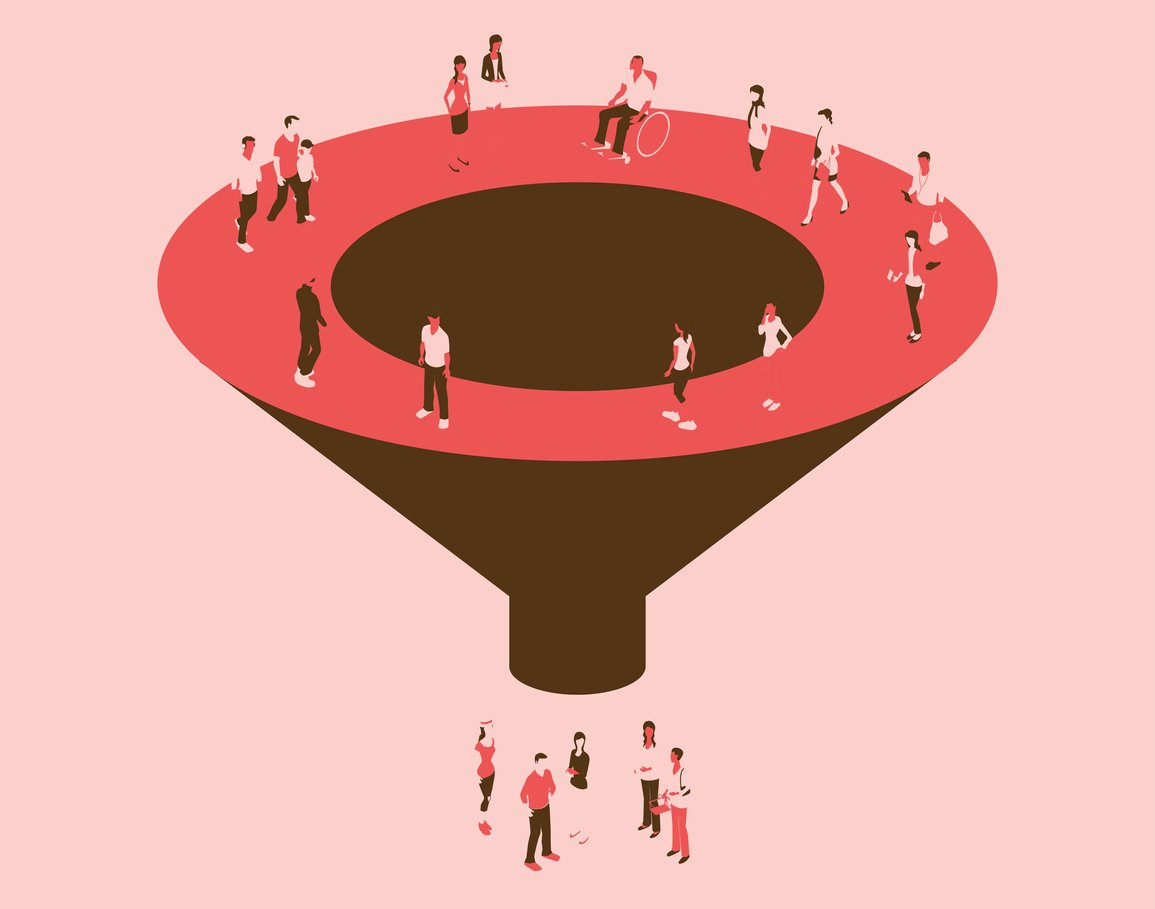
Traditional sales is fundamentally a volume-first game. It relies on inbound marketing or broad outbound prospecting to fill the top of the funnel with as many leads as possible. For instance, a traditional salesperson might cold call 100 random local businesses using a generic script, hoping that two or three might need a basic service.
ABS, by contrast, is a selectivity-first strategy. An account-based inside sales team might identify just five major enterprise accounts for the entire quarter. They will then spend weeks researching executives, mapping internal decision-makers, and crafting hyper-personalized campaigns tailored to those organizations.
|
Feature |
ABS |
Traditional Sales |
|
Lead Source |
Strategic outbound selection |
Inbound marketing & broad lists |
|
Target Volume |
Low quantity, exceptionally high quality |
High quantity, mixed quality |
|
Personalization Level |
Hyper-customized per account and role |
Standardized templates and scripts |
|
Team Collaboration |
Tight alignment between Sales & Marketing |
Siloed departments working independently |
|
Primary Metric |
Account penetration & contract value |
Call volume & total lead conversion rate |
|
Avg. Deal Size |
Large, high-ticket revenue |
Small to mid-market revenue |
Benefits of Account-Based Sales
Shifting from a broad prospecting model to an account-based framework requires upfront effort, but the strategic payoffs are massive for modern sales organizations.
1. Higher Win Rates on Bigger Deals
When your outreach speaks directly to a buyer's immediate corporate pain, they listen. Data consistently shows that personalized B2B outreach yields significantly higher response rates than generic templates.
By dedicating your energy exclusively to high-value targets that perfectly match your solution, your conversion rates climb. You stop fighting over scraps and start closing enterprise-level accounts.
2. Better ROI on Sales Effort
Chasing dead-end leads is the fastest way to burn out a remote sales closer. ABS ensures that every ounce of energy spent by your team goes toward accounts with a genuine organizational fit. This laser focus drastically lowers your Customer Acquisition Cost (CAC). Reps spend less time dialing disconnected numbers and more time building deep, consultative relationships with real decision-makers.
3. Cleaner Pipeline Management
A clogged pipeline full of unqualified generated leads creates an illusion of progress. With ABS, fewer accounts sit in your pipeline, meaning each one receives genuine, sustained attention. Stage-based pipeline tracking, like the features offered by Ringy, becomes immensely more meaningful. You can see exactly where a target account is stalled and deploy a tailored follow-up to nudge them to the next stage.
Account-Based Sales Best Practices

Implementing an ABS strategy requires discipline, the right tech stack, and a clear execution plan. Here is how top teams execute the process.
1. Build a Tight ICP
Targeting everyone means converting no one. Your ICP must go deeper than basic geography or industry. Look at the following:
- Firmographics (company size, revenue, tech stack)
- Buying triggers (recent leadership changes, funding rounds)
- Core operational pain points
If a company doesn't check every single box, they don't make your ABS list.
2. Research Before You Dial
Never go into an account cold. Before you pick up the phone, identify the key decision-makers, map out their internal hierarchy, and uncover their current corporate hurdles. When you pair this deep pre-call research with smart sales tools, like Ringy's local presence dialing, your answer rates skyrocket, and you instantly command authority the moment the prospect picks up.
3. Align Messaging Across Every Channel
An account-based approach falls apart if your messaging is disconnected. Your target account should experience a seamless, consistent story whether they are reading a text message, opening an email, or speaking to a representative on a call. Every touchpoint must reinforce the same value proposition tailored to their business.
4. Hand Off Accounts Intentionally
When a remote closer steps into the mix to finalize a deal, they cannot afford to ask basic, repetitive questions. They need absolute context, including:
- Every prior touchpoint
- Every documented objection
- A clear map of every stakeholder involved
Using stage-based pipeline tracking makes this internal handoff seamless, ensuring the client feels known and valued throughout their entire buying journey.
KPIs That Tell You If Your ABS Strategy Is Working
Tracking the health of an account-based strategy requires a shift away from vanity metrics like total dials made. Instead, focus on these account-centric key performance indicators:
|
KPI |
What It Measures |
Why It Matters for ABS |
|
Account Engagement Rate |
The percentage of targeted accounts actively interacting with your touchpoints. |
Confirms if your personalized messaging is actually breaking through the noise. |
|
Stakeholder Coverage |
The number of distinct decision-makers you have successfully engaged within a single account. |
Reduces single-point-of-failure risk by building multi-threaded relationships. |
|
Pipeline Velocity |
The speed at which a target account moves through your defined pipeline stages. |
Identifies friction points in your sales cycle where deals tend to stall out. |
|
Win Rate on Target Accounts |
The percentage of selected ICP accounts that successfully close. |
Validates that your upfront target selection criteria are accurate and profitable. |
|
Average Deal Size |
The financial value of contracts secured via your ABS framework. |
Proves that the strategy is successfully landing high-ticket revenue. |
|
Time to Close |
The duration from the initial account touchpoint to a signed contract. |
Helps benchmark resource allocation for future account planning. |
|
Customer Retention Rate |
The lifespan and renewal rate of accounts closed through ABS. |
Confirms that ABS-acquired clients have higher lifetime value and better fit. |
Frequently Asked Questions About Account-Based Sales
What's the difference between account-based sales and account-based marketing?
Account-Based Marketing (ABM) focuses on creating customized content, ads, and campaigns to warm up specific target accounts. Account-Based Sales (ABS) takes over to actively prospect, build direct relationships, and guide those specific accounts through the closing process.
Is account-based sales only for enterprise or large B2B teams?
No. While large enterprises frequently use it, small B2B teams, boutique agencies, and independent insurance agents utilize ABS to land high-value commercial accounts without needing a massive sales force.
How many target accounts should I start with?
When launching, it is best to start small. Limit your initial pilot program to 10 to 15 high-value target accounts per sales representative so they can maintain a high level of research and deep personalization.
What does a good ICP look like for insurance agents?
A strong insurance ICP might target commercial businesses with 50–200 employees, operating in high-risk industries like construction, who have recently expanded to multiple locations and require comprehensive fleet or liability coverage.
How does automation fit into an ABS strategy?
Automation should never replace personalization; instead, it should streamline your workflow. Use automation to trigger follow-up reminders, log communication histories, and manage pipeline stages so you can focus entirely on real relationships.
What's the biggest mistake teams make when starting ABS?
The most common mistake is failing to do deep enough research, which results in reps sending slightly customized templates that read like generic spam to sophisticated buyers.
How long does it take to see results from an ABS approach?
Because you are targeting larger, high-ticket accounts, initial sales cycles can take anywhere from a few months to two quarters, but the resulting deals are vastly larger and more stable.
Start Smaller to Win Bigger

Embracing an account-based sales strategy means trading the exhaustion of cold calling random lists for the precision of high-ticket closing. By focusing your energy on a curated selection of high-value targets, you build stronger pipelines and close larger contracts.
- Ready to maximize your sales efficiency? Try Ringy for free
- Need more information before taking the plunge? Book a demo for an in-depth overview of our system
- Want to see how our platform measures up? Compare Ringy with other CRMs

Skyrocket your sales with the CRM that does it all.
Calling? Check. SMS? Check. Automation and AI? Check. Effortlessly keep in touch with your customers and boost your revenue without limits.

Related Articles