 Updated on
 By Bradley Kovacs
Table of Contents

Choosing the right email automation software is no longer just about sending newsletters. Buyers now want faster setup, clearer ROI, better segmentation, and automation that fits their sales or marketing workflow without forcing a full-stack rebuild.
For teams comparing an email automation tool, an email automation platform, or even cold email automation options, the real question is which system matches the job you need done.
Key Takeaways
- Best Pick by Use Case: For high-velocity sales and integrated CRM capabilities, Ringy is the premier email outbound automation choice. If your focus is purely on complex newsletter journeys for e-commerce, ActiveCampaign leads the pack. For those just starting with basic templates and brand building, Mailchimp remains a solid entry-level email automation tool.
- Pricing Context & ROI: You can expect to pay anywhere from $15/month for basic tools to over $500/month for enterprise-grade email automation systems. The real ROI comes from reducing manual labor because a well-oiled email marketing automation system can save your team roughly 10–15 hours per week by handling follow-ups, lead scoring, and list hygiene automatically.
- Timeline Expectations: While you can send your first blast in an hour, building sophisticated, multi-step "if/then" workflows typically takes 2–4 weeks of testing. It involves setting up DKIM/SPF records to ensure deliverability, segmenting your current database, and A/B testing subject lines. Most companies see a measurable lift in engagement rates within the first 60 days of consistent, automated deployment.
- High-Value Buyer Criteria: When vetting the best outbound email automation, prioritize deliverability rates and CRM integration over vanity features like AI-written prose. A tool is only as good as its ability to land in the primary folder rather than the promotions tab. Look for marketing automation for SaaS that offers warm-up features for new domains and robust analytics that track not just opens, but true conversion events deep within your sales funnel.
How We Evaluated the Top 12 Email Management Software
To find the most effective email automation software, we conducted hands-on testing and cross-referenced user sentiment from verified Clutch reviews.
Our evaluation focused on API stability, the intuitive nature of the drag-and-drop builders, and how well each email automation tool handles high-volume sending without triggering spam filters. We excluded free-only tools that lack the scalability required for professional cold email automation or complex B2B sales cycles.
|
Tool |
Best For |
Key Features |
Starting Price |
Third-Party Rating |
Pros |
Cons |
Free Trial |
|
Sales Automation |
CRM Integration, Emailing, Drip Campaigns |
$119/mo |
4.3/5 (Capterra, 155 Reviews) |
Unified Inbox, Lead Distribution |
Learning curve for CRM |
Yes. 14 days |
|
|
Complex Journeys |
Predictive Sending, CXA |
$29/mo |
4.5/5 (G2) |
Powerful workflows |
Expensive at scale |
14 Days |
|
|
Beginners/SMBs |
Content Optimizer, AI |
$13/mo |
4.4/5 (G2) |
Huge template library |
Limited automation logic |
Free plan |
|
|
Budget-conscious multichannel senders |
Email, SMS, WhatsApp, CRM, automation |
$9/mo |
4.6/5 on Capterra |
Low entry cost, good multichannel value |
Less premium automation sophistication than higher-end platforms |
Free plan |
|
|
Businesses standardizing on HubSpot |
Email automation, forms, CRM, journeys, attribution |
Free; paid from $20/mo |
4.5/5 on Capterra |
Excellent ecosystem fit, strong reporting, good for scaling inbound |
Advanced tiers get expensive fast |
Free tools available |
|
|
Ecommerce brands |
Behavioral segmentation, revenue reporting, email + SMS, product-triggered flows |
Free; paid email from $60/mo |
4/5 on Capterra |
Strong for ecommerce personalization and revenue attribution |
Can be pricey for smaller brands or non-ecommerce teams |
Free plan |
|
|
Ecommerce brands wanting lower-cost omnichannel automation |
Email, SMS, segmentation, signup forms, automations |
$16/mo |
4.7/5 on Capterra |
Good ecommerce value, usable free plan, channel breadth |
Less flexible outside ecommerce use cases |
Free plan |
|
|
SMB marketers wanting broad functionality |
Email marketing, automation, landing pages, integrations |
From $13.30/mo |
4.2/5 on Capterra |
Solid feature breadth for price |
Can feel broad rather than best-in-class in one category |
Free trial |
|
|
DTC and ecommerce retention programs |
Ecommerce automations, segmentatio, personalization, migration help |
$39/mo |
4.4/5 on Capterra |
Good for conversion and retention workflows |
Costlier entry point than starter tools |
14 days |
|
|
Creators, newsletters, digital products |
Visual automations, sequences, landing pages, monetization tools |
Free; paid tiers available |
4.6/5 on Capterra |
Creator-focused workflows, clean automation experience |
Less suited to sales teams or complex B2B CRM processes |
Free plan |
|
|
B2B outbound and cold email automation |
Prospecting database, sequencing, email automation, analytics |
Free; paid from ~$49/mo |
4.7/5 on G2 |
Strong outbound capabilities, built-in data, good sequencing |
Limited for marketing automation use cases |
Yes |
|
|
Product-led and behavior-triggered messaging |
Event-based automation, segmentatio, email/SMS/push, A/B testing |
From $100/mo |
4.5/5 on G2 |
Powerful event-based automation, flexible data model |
Higher starting price, technical setup required |
Yes |
Ringy CRM — Best for Integrated Sales Outreach
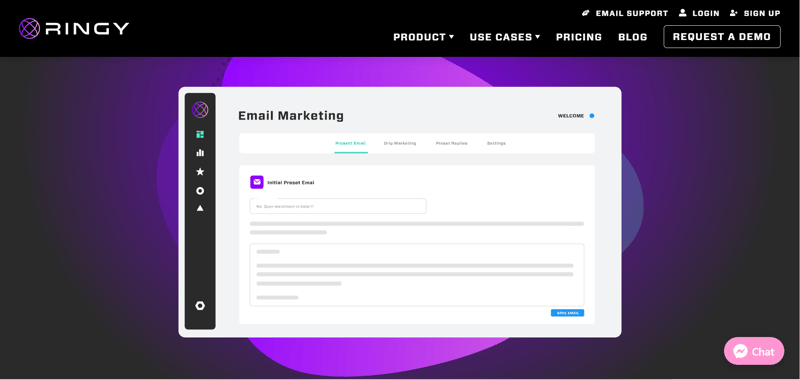
Ringy is more than just automation email software. Being a CRM system, it’s an all-in-one sales execution engine. While many tools focus solely on the inbox, Ringy bridges the gap between your CRM and your email outbound automation strategy.
It allows sales teams to trigger emails based on real-time lead behavior, ensuring that no prospect falls through the cracks. It is specifically designed to handle the speed-to-lead requirements of modern sales environments.
Best for
- High-Velocity Sales Teams: Ideal for those needing a cold email automation tool that syncs perfectly with SMS and cloud dialing.
- Lead Management: Best for businesses that buy leads and need an email marketing automation system to distribute and nurture them instantly.
- Multichannel Campaigns: Perfect for users who want to combine email automation tools with text and voice sequences.
Honest Limitations
Because Ringy is a full-featured CRM, it might feel like "too much tool" for a solo blogger or someone only looking to send a monthly newsletter. The setup requires mapping out your entire sales process, which can be more time-consuming than simpler, standalone email automation systems.
When to Choose Ringy
Choose Ringy when your goal is to convert leads into appointments. If you are looking for the best outbound email automation that handles the heavy lifting of CRM data entry while keeping your sequences running, Ringy is the most robust choice for maximizing sales efficiency.
ActiveCampaign — Best for Advanced Customer Journeys
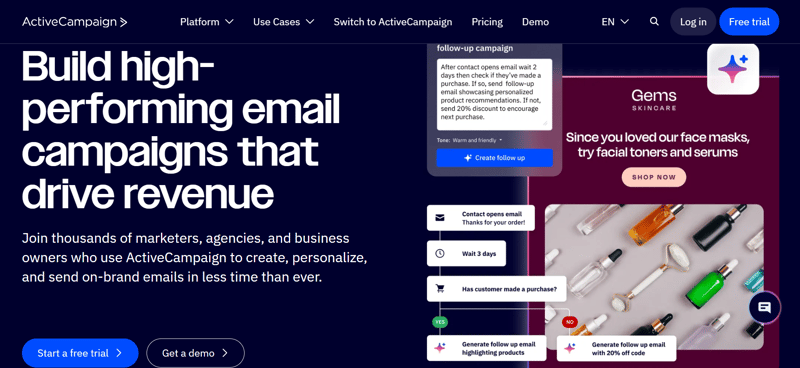
ActiveCampaign is frequently cited as the most powerful email marketing automation platform for small to mid-sized businesses that need granular control. Its visual automation builder is the industry gold standard, allowing for incredibly complex branching logic based on almost any user action imaginable.
Best for
- E-commerce Personalization: Excellent for marketing automation for SaaS or online stores needing cart abandonment and purchase-history triggers.
- Data-Driven Marketers: Ideal for those who want to use "predictive sending" to reach customers when they are most likely to engage.
Honest Limitations
The pricing escalates quickly as your contact list grows, making it a potentially expensive email marketing automation tool for high-volume senders. Additionally, the sheer number of features can lead to a cluttered interface that takes time to master.
When to Choose ActiveCampaign
Choose ActiveCampaign when your business model relies on intricate, multi-step customer journeys that require "if/then" logic at every turn. It is the premier email automation tool for marketers who want to automate the entire customer experience, from the first touchpoint on a website to post-purchase follow-ups, using data-heavy triggers.
Mailchimp — Best for Ease of Use and Brand Design
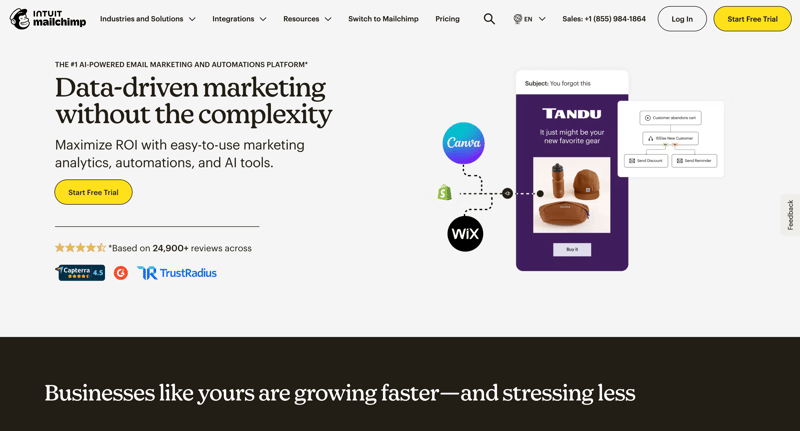
Mailchimp is the most recognizable email automation platform on the market, known for its user-friendly interface and creative tools. It has evolved from a simple blast tool into a comprehensive email marketing automation system that includes landing pages and social media management.
Best for
- Creative Agencies: Those who need beautiful, drag-and-drop templates without needing to code.
- Starting Out: Small businesses looking for a reliable email automation tool with a generous entry-level tier.
Honest Limitations
Mailchimp’s automation logic is often described as "linear" compared to other email marketing automation platforms. It lacks the deep sales-pipeline integration found in specialized email outbound automation software.
When to Choose Mailchimp
Choose Mailchimp if you are a small business or a creative brand that prioritizes design and ease of use over complex technical workflows. It is the best outbound email automation choice for users who want to get a polished, professional-looking campaign out the door in minutes rather than hours, backed by solid AI-driven content recommendations.
Brevo — Best for Budget-Friendly Multichannel Email Automation
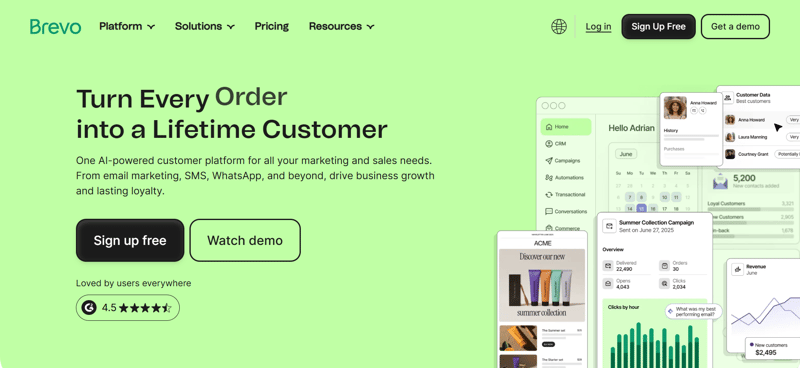
Brevo (formerly Sendinblue) is a cost-effective email automation platform that combines email, SMS, and basic CRM functionality into one system. It’s particularly attractive for small to mid-sized businesses that want more than just an email automation tool but aren’t ready to invest in enterprise-level platforms.
Its pricing model is also notable because it’s based on email volume rather than contact count, making it a strong option for teams with large lists but lower send frequency.
Best for
- Businesses looking for affordable email automation software with multichannel capabilities
- Teams that want email, SMS, and CRM features in one platform
- Companies prioritizing cost efficiency over advanced automation complexity
Honest Limitations
Brevo lacks the advanced workflow depth and segmentation capabilities found in more sophisticated email marketing automation platforms. While it handles basic automation well, it may fall short for teams needing complex branching logic or highly personalized campaigns. Reporting and analytics are also less robust compared to premium tools.
When to Choose Brevo
Choose Brevo when budget is your primary constraint but you still need a reliable email automation system with added communication channels like SMS. It’s ideal for teams that want to consolidate tools without overcomplicating their automation setup.
HubSpot Marketing Hub — Best for All-in-One Inbound Marketing Automation
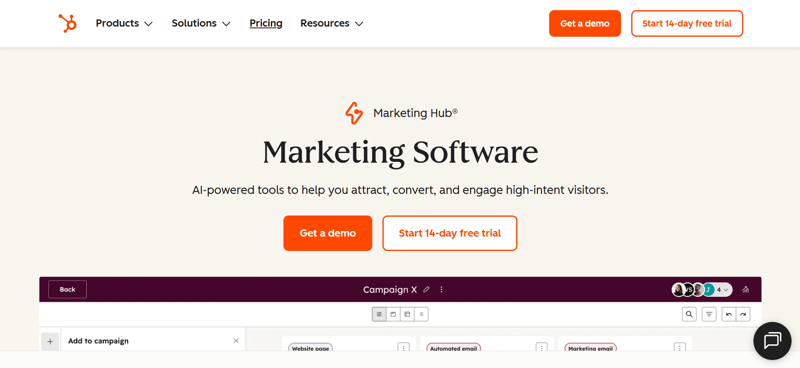
HubSpot Marketing Hub is a comprehensive email marketing automation platform designed for businesses that want to unify email, CRM, content, and analytics under one ecosystem. It’s especially strong for inbound marketing strategies, offering tools for lead capture, nurturing, and attribution.
Because it integrates deeply with HubSpot’s CRM, it’s one of the most complete email automation systems for tracking the full customer journey.
Best for
- Teams running inbound and content-driven marketing strategies
- Businesses that want CRM, email automation, and analytics in one platform
- Companies scaling into enterprise-level marketing automation for SaaS or B2B
Honest Limitations
HubSpot’s biggest drawback is cost. While it offers free tools, advanced automation features quickly move into higher-priced tiers. It can also feel heavy for teams that only need a lightweight email automation tool, and onboarding may require time and training.
When to Choose HubSpot Marketing Hub
Choose HubSpot when you want a fully integrated ecosystem that connects your email automation software with CRM, content, and reporting. It’s ideal for teams focused on long-term growth, inbound marketing, and full-funnel visibility rather than just campaign execution.
Klaviyo — Best for Ecommerce Personalization and Revenue-Driven Automation
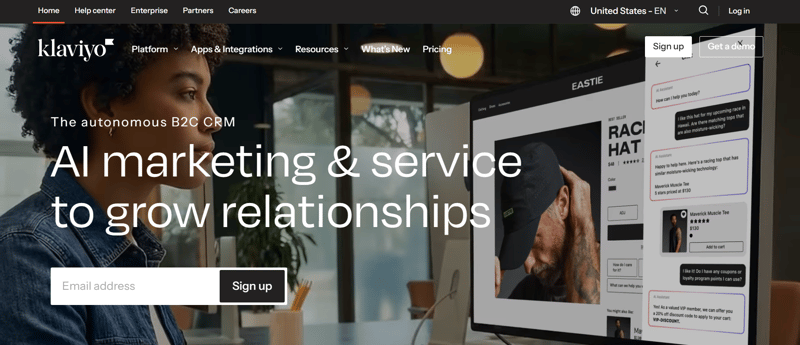
Klaviyo is a leading email automation platform for ecommerce brands, built around customer data and revenue attribution. It enables highly personalized campaigns based on browsing behavior, purchase history, and engagement signals.
Unlike general-purpose email automation tools, Klaviyo is designed specifically to drive revenue through targeted messaging and lifecycle automation.
Best for
- Ecommerce businesses needing advanced segmentation and personalization
- Brands focused on revenue attribution and lifecycle marketing
- Teams running product-triggered campaigns and retention workflows
Honest Limitations
Klaviyo is less suitable for non-ecommerce use cases such as B2B or service-based businesses. Pricing can also increase quickly as contact lists grow, making it less accessible for smaller teams. Additionally, its ecommerce focus may limit flexibility outside that niche.
When to Choose Klaviyo
Choose Klaviyo when your business relies on ecommerce revenue and you need a specialized email marketing automation system that ties directly to customer behavior and sales performance. It’s one of the strongest tools for maximizing customer lifetime value.
Omnisend — Best for Omnichannel Ecommerce Automation
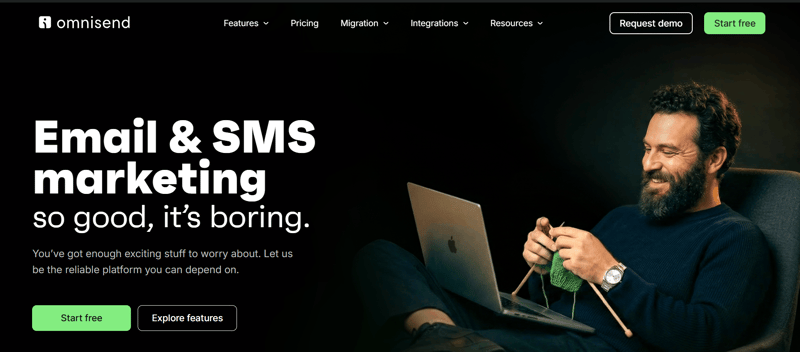
Omnisend is another ecommerce-focused email automation software that emphasizes simplicity and multichannel communication. In addition to email, it supports SMS and push notifications, allowing brands to create cohesive customer journeys across channels.
It’s often positioned as a more affordable alternative to Klaviyo, while still offering strong automation features.
Best for
- Ecommerce brands needing email, SMS, and push automation in one tool
- Businesses looking for a balance between cost and functionality
- Teams wanting an easy-to-use email automation platform for omnichannel campaigns
Honest Limitations
While Omnisend is strong for ecommerce, it lacks the depth and sophistication of higher-end tools when it comes to segmentation and advanced workflows. It’s also less suitable for B2B or non-retail use cases.
When to Choose Omnisend
Choose Omnisend when you want a user-friendly email automation tool that supports multiple channels without the complexity or cost of enterprise platforms. It’s ideal for ecommerce brands scaling their marketing efforts.
GetResponse — Best for All-in-One Marketing Automation on a Budget
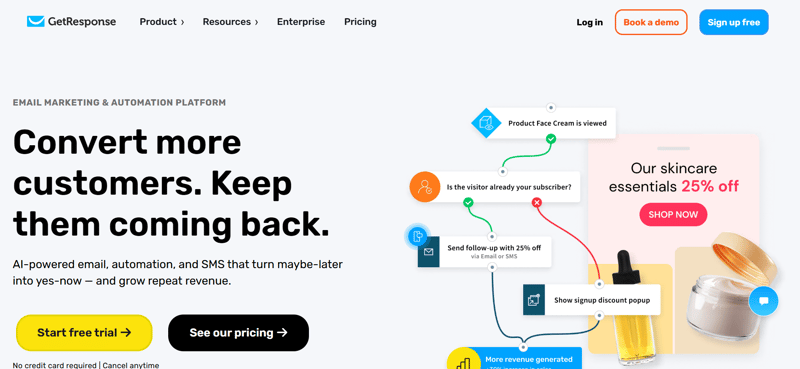
GetResponse is a versatile email marketing automation platform that includes email campaigns, landing pages, webinars, and automation workflows. It’s positioned as an all-in-one solution for small to mid-sized businesses looking to manage multiple aspects of digital marketing from one dashboard.
This breadth makes it appealing for teams that want more than just an email automation system.
Best for
- SMBs looking for an all-in-one email automation platform
- Marketers running campaigns, landing pages, and webinars together
- Businesses needing a balance of features and affordability
Honest Limitations
GetResponse offers a wide range of features, but it may not excel in any single category compared to specialized tools. Advanced automation and segmentation can feel less powerful than competitors like ActiveCampaign, and the interface can feel dated in some areas.
When to Choose GetResponse
Choose GetResponse when you want a broad marketing toolkit that includes email automation software alongside landing pages and campaign management. It’s a practical choice for teams that value convenience over specialization.
Drip — Best for Ecommerce Retention and Lifecycle Automation
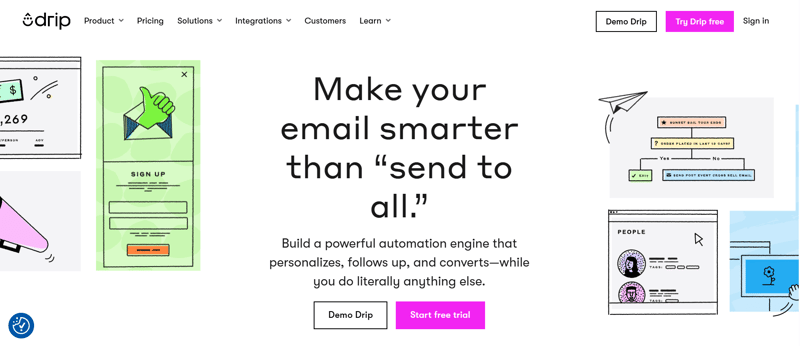
Drip is an ecommerce-focused email automation platform designed to help brands build long-term customer relationships through personalized messaging. It emphasizes lifecycle marketing, segmentation, and revenue tracking, making it a strong tool for retention and repeat purchases.
Its automation capabilities are tailored specifically to ecommerce workflows.
Best for
- Ecommerce brands focused on retention and customer lifetime value
- Teams needing detailed segmentation and lifecycle automation
- Businesses running advanced email and SMS marketing campaigns
Honest Limitations
Drip’s ecommerce focus makes it less suitable for B2B or service-based businesses. Its pricing can also be higher than entry-level tools, which may limit accessibility for smaller teams. Additionally, it may require more setup to fully leverage its capabilities.
When to Choose Drip
Choose Drip when your goal is to build deeper customer relationships and maximize repeat purchases through advanced email marketing automation systems. It’s particularly effective for brands prioritizing retention over acquisition.
Kit — Best for Creators and Newsletter-Driven Businesses
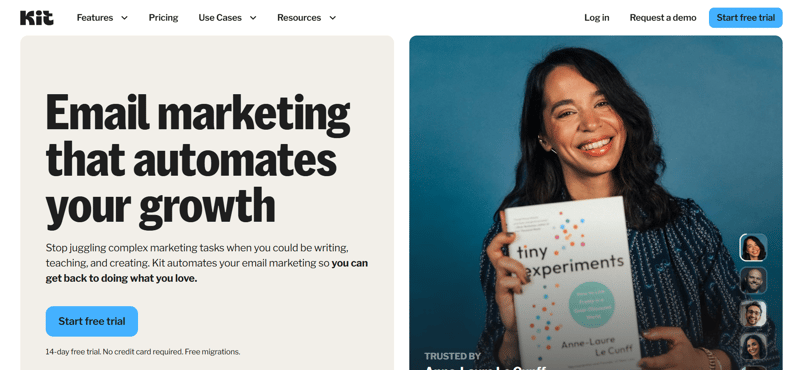
Kit (formerly ConvertKit) is a creator-focused email automation tool designed for bloggers, influencers, and digital product sellers. It simplifies automation while still offering enough flexibility for segmentation, tagging, and audience growth.
Its strength lies in helping creators monetize audiences through email without overwhelming complexity.
Best for
- Creators, bloggers, and newsletter-based businesses
- Teams selling digital products or subscriptions
- Users who want a simple, intuitive email automation platform
Honest Limitations
Kit lacks advanced automation features compared to more robust platforms and is not ideal for complex B2B or ecommerce workflows. Its feature set is intentionally streamlined, which can be limiting for larger teams.
When to Choose Kit
Choose Kit when your focus is audience building and monetization through email. It’s one of the most accessible email automation tools for creators who want to grow and engage their audience without dealing with overly complex systems.
Apollo.io — Best for B2B Outbound and Cold Email Automation
Apollo.io is built specifically for outbound sales teams that need both prospect data and cold email automation in one place. Unlike traditional email automation software, Apollo combines a large contact database with sequencing tools, allowing users to find leads and immediately enroll them into automated outreach campaigns.
This makes it particularly useful for SDRs and growth teams focused on pipeline generation, where speed and volume matter as much as personalization.
Best for
- Teams focused on best outbound email automation and sales prospecting at scale
- B2B companies that want built-in lead data alongside sequencing tools
- Sales teams running multi-step outbound campaigns without needing a separate data provider
Honest Limitations
Apollo.io is not designed as a full email marketing automation platform, so it lacks the depth needed for lifecycle marketing, newsletters, or complex nurture flows. While it excels at outbound, teams looking for inbound marketing automation, content-driven campaigns, or advanced segmentation may find it limiting. Additionally, data accuracy, while strong, still requires validation depending on your target market.
When to Choose Apollo.io
Choose Apollo.io when your primary goal is pipeline generation through outbound efforts. It’s one of the strongest options for email outbound automation, especially if you want prospecting, enrichment, and sequencing in one tool. For teams that live and die by outbound performance, Apollo simplifies the stack significantly.
Customer.io — Best for Product-Led and Event-Based Automation
Customer.io is a powerful email automation platform designed for businesses that rely heavily on user behavior and product data to trigger messaging. It stands out for its event-based architecture, allowing teams to build automation flows based on real-time actions inside apps or platforms.
This makes it a strong choice for SaaS companies and product-led growth teams that want highly personalized messaging tied to user behavior.
Best for
- SaaS companies running marketing automation for SaaS with product usage triggers
- Teams needing advanced segmentation and event-based workflows
- Businesses looking to unify email, SMS, and push notifications in one automation system
Honest Limitations
Customer.io requires more technical setup than many other email automation tools, especially when integrating product data or custom events. Its pricing also starts higher than entry-level tools, which may not suit smaller teams or early-stage businesses. Non-technical users may face a learning curve when building advanced workflows.
When to Choose Customer.io
Choose Customer.io when your messaging strategy depends on real-time behavior and product interactions. It’s one of the best options for teams that need highly customized email marketing automation systems driven by user events rather than static lists. For product-led companies, it delivers a level of flexibility that simpler tools cannot match.
Frequently Asked Questions
Selecting the right email automation software involves navigating a lot of technical jargon. Here are the most common questions buyers ask during their search.
What Is the Difference Between Email Automation Software and an Email Marketing Platform?
An email automation software product can be sales-first, marketing-first, or ecommerce-first. An email marketing automation platform usually emphasizes campaigns, segmentation, nurture flows, and reporting for marketers. A sales-oriented system like Ringy is more focused on follow-up execution, CRM workflow, and rep activity, while ActiveCampaign and Mailchimp lean more toward marketing use cases.
How Long Does Implementation Usually Take?
A simple welcome series, lead acknowledgment workflow, or basic re-engagement sequence can often be launched within days. A more complete rollout with audience cleanup, CRM syncing, branch logic, testing, and reporting usually takes several weeks, especially for teams implementing advanced email automation systems or cross-channel programs.
How Much Should I Expect to Pay for a Quality Email Automation Platform?
Prices vary wildly. Most email marketing automation platforms start around $15–$50 per month for basic features, but for an integrated CRM and email automation system like Ringy, you are investing in a comprehensive sales tool that typically offers higher ROI through consolidated features.
Conclusion
All three email automation systems offer unique features to help businesses streamline email marketing efforts and increase customer engagement. However, Ringy CRM stands out as the best option due to its all-in-one suite that includes email automation, CRM, and telephony features.
With our CRM, you can create and automate email campaigns, manage customer data, track interactions, and make and receive calls. The visual workflow builder makes creating complex email journeys for customers easy, while the telephony integration streamlines the sales process.
If you're looking for an all-in-one email automation system to help your business grow, try Ringy CRM. Our platform's features and easy-to-use interface allow you to streamline your email marketing efforts and increase your revenue!

Skyrocket your sales with the CRM that does it all.
Calling? Check. SMS? Check. Automation and AI? Check. Effortlessly keep in touch with your customers and boost your revenue without limits.

Related Articles























.jpg)